

Licensed Asbestos Roof Removal and Replacement in Brisbane
An old asbestos roof does not automatically need to be removed immediately. If the sheets remain intact, sealed and undisturbed, they can often be managed in place. Replacement becomes more likely when the roof is cracked, leaking, badly weathered, storm damaged or affected by planned renovations.
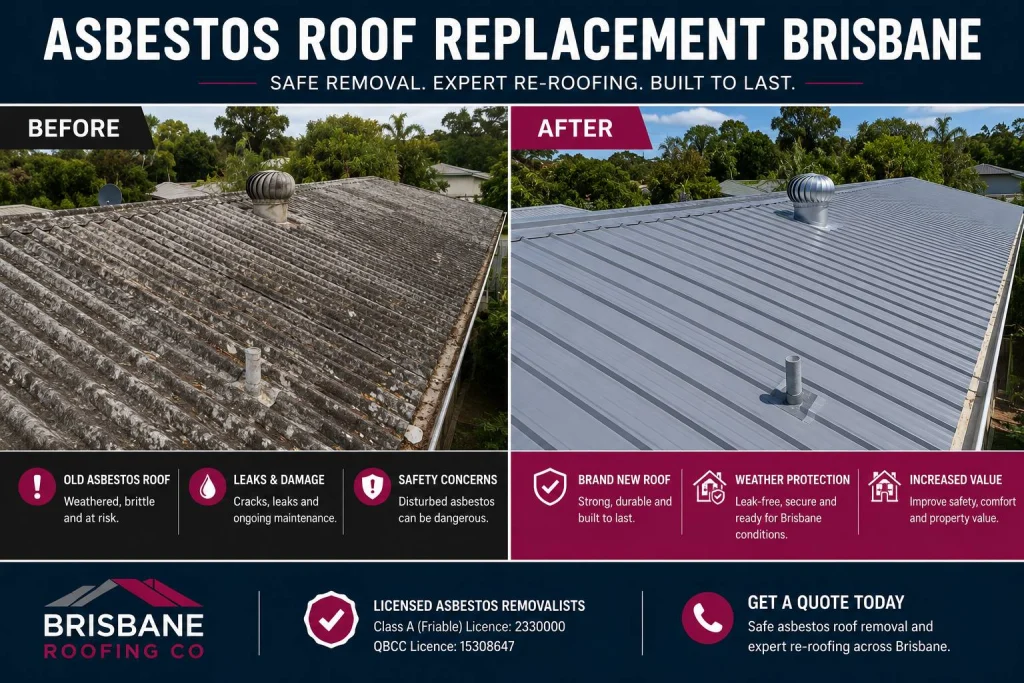
Brisbane Roofing Co provides asbestos roof replacement in Brisbane for homes, garages, sheds and commercial buildings. The service combines controlled removal of the existing asbestos cement roofing with the installation of a modern metal roof suited to the property.
A complete asbestos roof replacement involves more than removing old sheets. The roof must be assessed, the licensed removal work planned, the site protected, the asbestos waste lawfully disposed of and the exposed roof structure checked before the new roofing system is installed.
Suspect Your Roof Contains Asbestos?
Do not pressure clean, drill, cut, sand, grind or walk on suspected asbestos cement roofing. Have it assessed before arranging repairs, solar installation, painting or replacement.
QBCC Licence: 15308647
Asbestos Removal Licence: 2330000
What Is an Asbestos Roof?
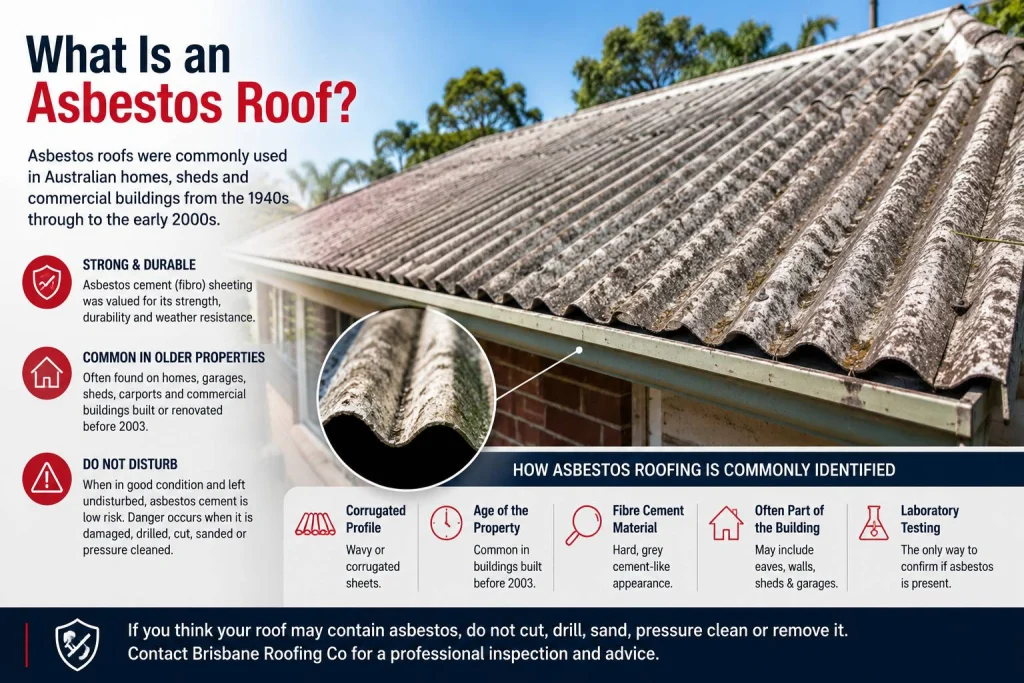
Most asbestos roofs found on older Brisbane properties are made from corrugated asbestos cement sheeting. The material is also commonly called fibro, AC sheeting or Super Six, although Super Six originally referred to a particular deep-corrugated roofing product.
Manufacturers mixed asbestos fibres with cement to produce strong, relatively lightweight sheets. This roofing was installed on houses, garages, carports, sheds, factories and commercial buildings throughout much of the twentieth century.
Asbestos cement is generally classified as non-friable or bonded asbestos. The fibres are held within the hardened cement. When the sheets remain intact and undisturbed, the exposure risk is lower than it is with loose or friable asbestos.
The risk increases when asbestos cement roofing is:
- Cracked, broken or badly weathered
- Cut, drilled, sanded or ground
- Cleaned with high-pressure water
- Damaged by hail, wind, fire or falling branches
- Walked on or handled without appropriate controls
- Removed using unsafe tools or work methods
Australia prohibited the manufacture, supply, use and reuse of asbestos-containing products from 31 December 2003. The ban did not require asbestos already installed in buildings to be removed, so legacy asbestos roofing remains on many older Brisbane properties.
How Do I Know if My Brisbane Roof Contains Asbestos?
You cannot confirm asbestos from the roof’s colour, staining or profile alone. Asbestos cement products can look almost identical to later asbestos-free fibre cement sheets.
Clues that a roof may contain asbestos include:
- The building was constructed or renovated before 1990
- The roof consists of older corrugated cement-style sheets
- The roofing is on an older garage, shed, carport or extension
- The property has similar fibre cement eaves, cladding or gable panels
- No installation records or reliable product markings are available
- The sheets have been painted or repaired several times
These clues can raise a reasonable suspicion, but they do not provide laboratory confirmation. Where certainty is required, a representative sample must be analysed by a NATA-accredited laboratory. Sampling should be arranged through an experienced asbestos professional rather than by breaking off a piece yourself.
Testing is not always essential before removal. A roof can instead be presumed to contain asbestos and managed under the asbestos requirements throughout the project. The contractor should explain which approach is suitable for the proposed work.
Does an Asbestos Roof Have to Be Replaced?
No. An intact asbestos cement roof does not automatically require removal simply because asbestos is present.
Leaving the roof undisturbed may remain an option when:
- The sheets are intact and securely fixed
- There is no substantial weathering or surface breakdown
- The roof is not leaking
- No renovation or installation work will disturb it
- The roof can be safely managed without drilling, cutting or cleaning it
Replacement should be seriously considered when:
- Sheets are cracked, broken or becoming brittle
- The roof has recurring leaks
- Damage affects several parts of the roof
- The surface is severely weathered or deteriorating
- Storm or tree damage has disturbed the sheets
- Repairs would require repeated disturbance of asbestos
- Solar panels, extensions or major renovations are planned
- The roof has reached the end of its practical serviceable life
The decision should be based on the roof’s condition, future building plans and the likelihood of disturbance—not fear-based claims that every asbestos roof is immediately dangerous.
Never Pressure Clean an Asbestos Roof
“`
Using high-pressure water on asbestos cement roofing is illegal in Queensland. Water blasting can strip away the cement surface and spread asbestos-contaminated material across gutters, gardens, neighbouring properties and stormwater areas.
Do not use a pressure cleaner to prepare suspected asbestos roofing for painting. The roof should first be properly identified and assessed using work methods appropriate for asbestos-containing material.
“`
Queensland Licensing Requirements for Asbestos Roof Removal
Most residential asbestos roofs are made from non-friable asbestos cement and cover substantially more than 10 square metres. In Queensland, a business removing more than 10 square metres of non-friable asbestos must hold an appropriate Class A or Class B asbestos removal licence.
Class B Asbestos Removal Licence
A Class B licence permits the removal of non-friable asbestos, including bonded asbestos cement roof sheets, and associated asbestos-contaminated dust or debris.
Class A Asbestos Removal Licence
A Class A licence permits the removal of both friable and non-friable asbestos. Friable asbestos is material that is loose, powdery or capable of being crumbled or reduced to powder by hand pressure when dry.
Standard asbestos cement roof sheeting is generally non-friable. However, badly degraded material or other asbestos products found during the project may require further assessment.
Other Requirements for Licensed Removal Work
Licensed asbestos roof removal also involves requirements beyond holding a licence. Depending on the project, these include:
- Preparing a site-specific asbestos removal control plan
- Notifying Workplace Health and Safety Queensland before licensed removal work begins
- Informing occupants and other affected parties about the planned work
- Establishing exclusion areas, signs and access controls
- Using appropriate removal, decontamination and waste procedures
- Arranging an independent clearance inspection
- Obtaining a written clearance certificate
For licensed Class B work, the clearance inspection must be completed by an independent competent person. Friable asbestos removal requiring a Class A licence has additional requirements, including a licensed asbestos assessor and mandatory air monitoring.
Our Asbestos Roof Replacement Process
1. Inspect the Roof and Property
The first step is to assess the likely roofing material, visible condition, roof area, pitch, access and surrounding property. The inspection also considers gutters, flashings, solar panels, electrical hazards and any nearby areas that need protection.
If the roof cannot be safely accessed, the initial assessment may need to be completed from the ground, from another safe position or using suitable inspection equipment.
2. Confirm the Scope of Work
The quotation should clearly identify what is being removed and what is being installed. This may include:
- Asbestos cement roof sheets and cappings
- Asbestos-contaminated fragments or debris
- Existing flashings and fixings
- Battens requiring replacement or modification
- New sarking or roofing blanket
- New metal roof sheets and cappings
- Gutters and downpipes where included
- Solar panel or equipment removal and reinstatement
3. Plan the Licensed Removal
Before work begins, the removalist prepares the required control plan and notifications. Site access, exclusion zones, weather conditions, fall protection, waste containment and temporary weather protection are considered.
4. Prepare and Isolate the Work Area
The work area is restricted to authorised personnel. Appropriate signs, barriers and protective measures are installed, and occupants or affected neighbours are advised where required.
5. Remove the Asbestos Roofing
The sheets are carefully released and removed as intact as reasonably practicable. They should not be deliberately smashed, dropped or cut into small pieces simply to make handling easier.
Controlled wet methods may be used to suppress dust. High-pressure water, abrasive tools and work methods that create airborne asbestos fibres are not used.
6. Contain and Dispose of the Asbestos Waste
Asbestos sheets, fragments and contaminated waste are securely wrapped or placed in suitable lined containers, labelled and transported to a facility authorised to receive asbestos waste.
Asbestos roofing cannot be placed in household bins, mixed with ordinary building waste or left in a standard skip that is not approved for asbestos.
7. Complete the Clearance Inspection
After the asbestos removal work is complete, the removal area and its immediate surroundings are inspected by an appropriately independent person. A clearance certificate must be issued before the area is returned to normal use.
Routine air monitoring is not automatically required for every Class B roof removal, but it may be recommended where the location, condition of the material or removal circumstances justify it.
8. Inspect the Exposed Roof Structure
Once the old sheets have been removed, the battens and accessible roof framing can be checked. This may reveal corrosion, timber deterioration or earlier water damage that was concealed beneath the roof.
Any additional work should be documented and approved before it is completed.
9. Install the New Roof
The replacement roofing system is installed using the specified profile, fasteners, flashings, sarking and insulation. Roof pitch, drainage, wind classification and environmental exposure must be considered when selecting the new materials.
10. Final Roofing Inspection and Clean-Up
The completed roof is checked for correct sheet alignment, fixings, flashings, cappings and drainage. The site is cleaned and the relevant roofing, removal, clearance and warranty documentation is supplied.
How Much Does Asbestos Roof Replacement Cost in Brisbane?
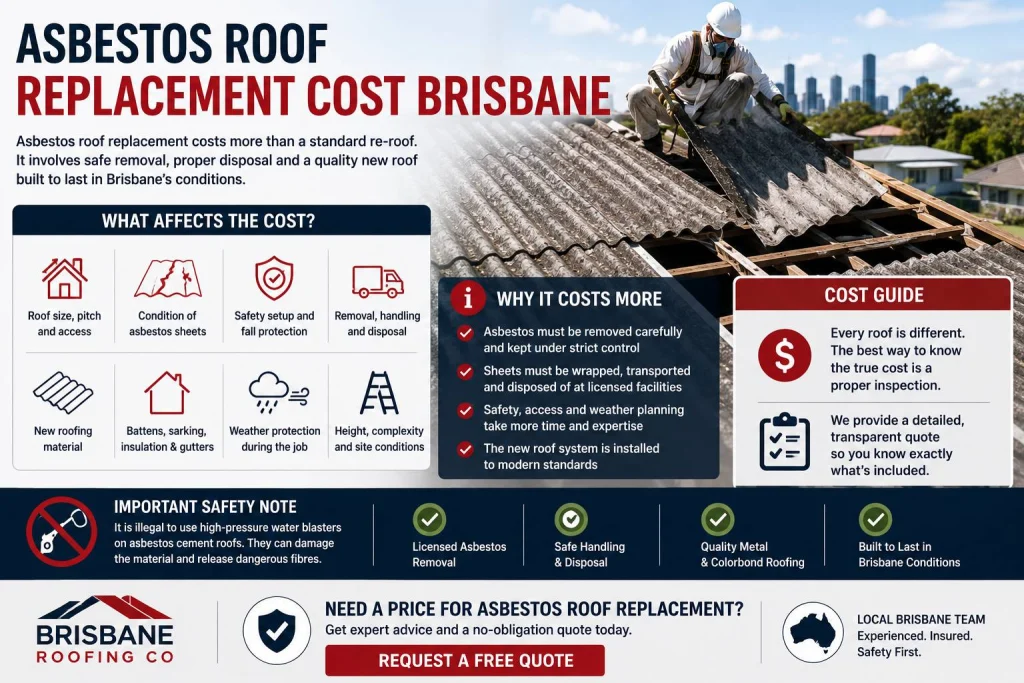
There is no dependable flat rate for every asbestos roof. Two roofs with a similar area can have very different costs because of access, height, roof design, condition and replacement specifications.
Most complete residential asbestos roof replacement projects are substantial five-figure jobs. A detailed onsite assessment is needed before a responsible fixed quotation can be prepared.
Factors That Affect the Price
- Total roof area
- Roof height, pitch and complexity
- Condition and brittleness of the existing sheets
- Access for workers, equipment and waste removal
- Edge protection, scaffolding or other safety equipment
- Amount of asbestos-contaminated debris
- Transport and lawful disposal costs
- Selected replacement roofing product
- New battens or structural repairs
- Sarking, insulation and ventilation
- Gutters, downpipes and flashings
- Solar panels and roof-mounted equipment
- Approval, engineering and certification requirements
What Should Be Included in the Quote?
Before comparing prices, check whether each quote includes:
- Licensed asbestos removal
- Workplace notifications and site controls
- Wrapping, transport and authorised disposal
- Independent clearance inspection and certificate
- Removal of the existing roofing and flashings
- Exact replacement product, profile and colour
- Battens, sarking and insulation
- New cappings, flashings and compatible fasteners
- Gutter and downpipe work
- Safety equipment and site access
- Building approval or engineering where required
- Queensland Home Warranty Scheme premium where applicable
- Product and workmanship warranty terms
- Items specifically excluded from the price
Be Careful with Very Cheap Asbestos Roof Quotes
“`
A low quote may exclude disposal, clearance, insulation, flashings, safety equipment or repairs found after the old roof is removed. Compare the complete scope rather than the final figure alone.
“`
How to Choose an Asbestos Roof Replacement Contractor
Asbestos roof replacement combines regulated removal work with licensed roofing work. Homeowners should verify both parts of the project before signing a contract.
Ask the contractor to provide:
- The legal name of the business entering the contract
- A current QBCC licence covering the roofing work
- The asbestos removal licence number
- Evidence of relevant insurance
- A detailed written removal and replacement scope
- The name of the proposed roofing product and profile
- Details of the independent clearance arrangement
- Waste transport and disposal arrangements
- Written product and workmanship warranties
- A process for approving concealed repairs
Do not rely only on a logo, business name or licence number printed on a quotation. Check the licence details and make sure they belong to the business completing the work.
Will Insurance Pay for Asbestos Roof Replacement?
Home insurance may contribute when an asbestos roof is damaged by a sudden event covered by the policy, such as hail, wind, fire or a fallen tree. Coverage depends on the policy wording, the cause of the damage and the insurer’s assessment.
Insurance generally does not operate as a maintenance program. Age, weathering, corrosion, poor maintenance and pre-existing deterioration may be excluded.
After storm damage:
- Keep people away from the roof and any fallen fragments
- Photograph visible damage from a safe position
- Contact the insurer promptly
- Follow its instructions before authorising permanent work
- Keep invoices and records for emergency measures
Do not climb onto the roof to gather evidence. Asbestos cement sheets may be brittle and can break without warning.
Asbestos Roof Replacement Across Brisbane
Brisbane Roofing Co assists property owners across the Brisbane metropolitan area, including the Northside, Southside, eastern and bayside suburbs, inner Brisbane and western suburbs.
Asbestos roofing may be found on post-war homes, Queenslanders, garages, carports, sheds, workshops, unit complexes and commercial buildings. In many cases, the main house has already been renovated while an older extension or outbuilding still carries its original asbestos cement roof.
Service availability outside the Brisbane metropolitan area should be confirmed when requesting a quote.
Asbestos Roof Replacement Brisbane FAQs
Is an intact asbestos roof dangerous?
An intact, sealed and undisturbed asbestos cement roof generally presents a lower exposure risk. The risk increases when the material is damaged, badly weathered or disturbed in a way that releases airborne fibres.
Can asbestos roofing be identified from a photograph?
A photograph may indicate that the roof is likely to contain asbestos, but it cannot provide definite confirmation. Laboratory analysis is required when certainty is needed.
Do I need to test the roof before replacing it?
Not necessarily. A suspected roof may be presumed to contain asbestos and removed under the applicable asbestos controls. Testing may be useful when the result would change the scope or cost of the work.
Can an asbestos roof be repaired?
Some limited management or repair may be possible where the sheets remain stable and the work can be completed without unsafe disturbance. A badly weathered, brittle or repeatedly leaking roof may be better suited to complete replacement.
Can I paint an asbestos roof?
Coating may be considered for some intact asbestos cement roofs, but preparation and application must follow asbestos-safe methods. High-pressure washing, sanding and abrasive preparation must not be used.
Can I install solar panels on an asbestos roof?
Installing solar equipment may involve drilling, fixings and foot traffic. Have the roof assessed before proceeding. Replacing an ageing asbestos roof before installing solar can avoid paying to remove and reinstall the panels later.
Can I stay home during asbestos roof removal?
This depends on the removal control plan, property layout and scope of work. Occupants will normally need to remain outside the controlled work area and may be asked to leave the property during active removal. The contractor should explain the arrangements before work begins.
Is air monitoring required?
Air monitoring is mandatory for friable asbestos removal. It is not automatically required for every non-friable Class B roof removal, although it may be recommended depending on the location, material condition and risk assessment.
Will I receive a clearance certificate?
Yes. Licensed asbestos removal at residential premises requires a clearance inspection and written clearance certificate. For Class B work, the inspection is completed by an independent competent person. Class A work requires an independent licensed asbestos assessor.
How long does asbestos roof replacement take?
The timeframe depends on roof size, access, weather, removal requirements and repairs found after the sheets are removed. Straightforward projects may take several working days, while larger or more complex roofs can take longer.
What happens if damaged battens are found?
The contractor should photograph and explain the damage, provide the cost of the additional work and obtain approval before completing repairs outside the original scope.
What replaces an asbestos roof?
Coated steel roofing is the most common replacement. The appropriate profile, colour, insulation and material grade should be selected for the roof pitch, building design and environmental exposure.
Request an Asbestos Roof Replacement Assessment
If your roof is cracked, leaking, storm damaged or made from older corrugated cement sheeting, do not disturb it before obtaining professional advice.
Brisbane Roofing Co can assess the property, explain the likely removal requirements and prepare a detailed quote for licensed asbestos roof removal and replacement with modern metal roofing.
QBCC Licence: 15308647
Asbestos Removal Licence: 2330000
