
What Is Super Six Asbestos Roofing?
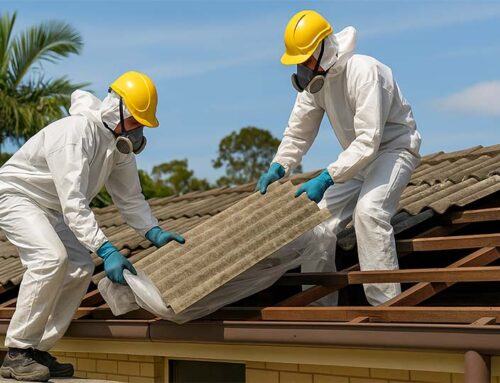
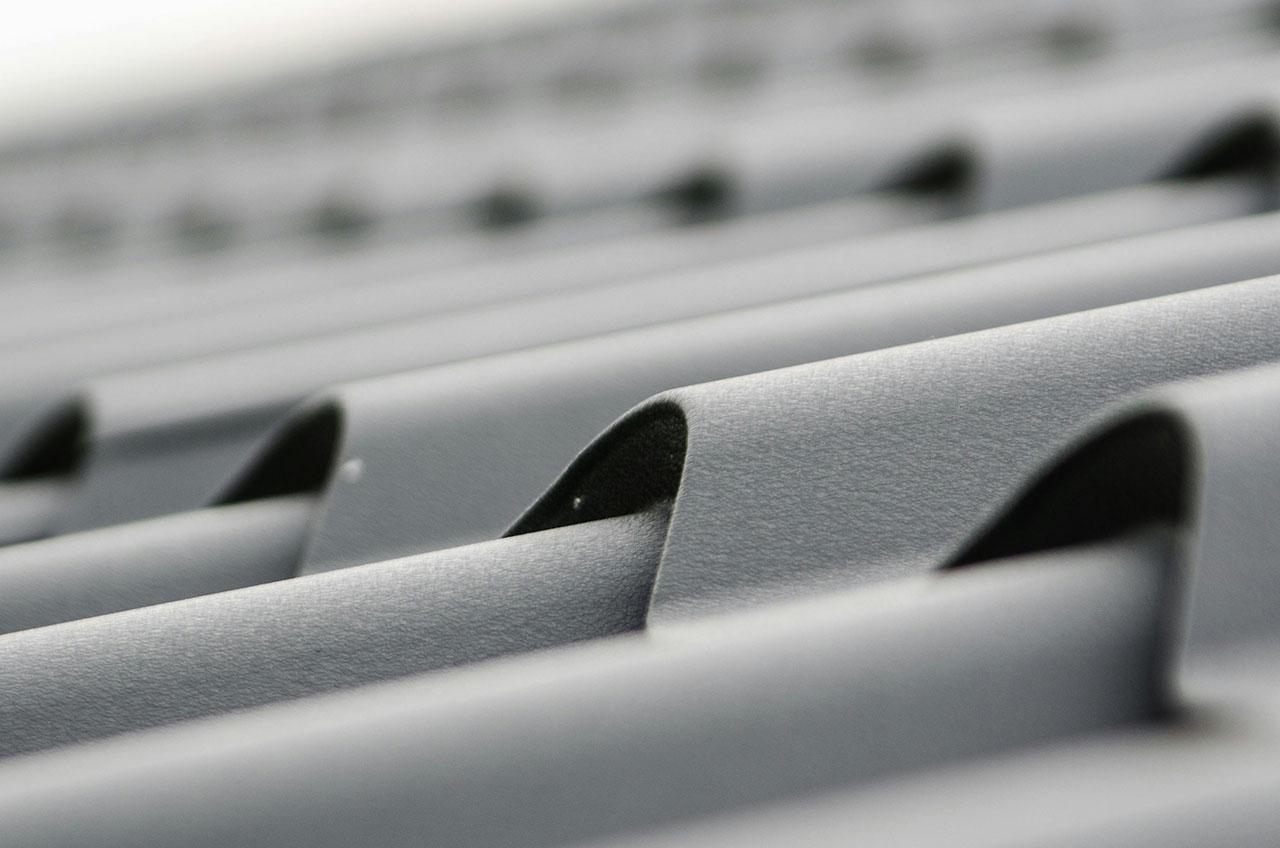
Super Six is the name commonly used in Australia for deep-corrugated asbestos cement roof sheeting. It was originally a James Hardie product name, but over time “Super Six” became a general term for similar corrugated asbestos roofing installed on homes, garages, sheds, factories and commercial buildings.
Super Six asbestos roofing was widely used throughout Brisbane and the rest of Australia for many decades. Although Australian manufacturers stopped using asbestos in most building sheets during the 1980s, older stock continued to be installed before 1990. Some later sheets carrying the Super Six name were made without asbestos, so appearance alone cannot reliably confirm whether a roof contains asbestos.
Where the age or composition of a roof is uncertain, a sample should be collected safely and tested by a NATA-accredited laboratory. Homeowners should not break, cut or remove a piece of roofing for testing themselves.
What Is Super Six Roofing Made From?
Traditional Super Six sheets are a form of bonded, or non-friable, asbestos cement. They were manufactured by combining Portland cement with asbestos fibres, which added strength and durability to the finished sheets. Corrugated asbestos cement roofing contained approximately 15% asbestos on average.
Depending on the product and when it was manufactured, asbestos cement sheeting may contain chrysotile asbestos and, in some older products, crocidolite asbestos. The exact fibre type cannot be identified simply by looking at the roof.
Super Six is not another name for amosite. Amosite, commonly called brown asbestos, is a separate type of asbestos. The word “amosite” was derived from the name Asbestos Mines of South Africa.
Is a Super Six Asbestos Roof Dangerous?
Super Six is normally classified as bonded asbestos because the fibres are held within the cement. An intact, sealed and undisturbed asbestos cement roof does not generally present the same immediate exposure risk as loose or friable asbestos.
However, asbestos roofs are now ageing. Years of exposure to Brisbane’s sun, heavy rain, hail, wind and organic growth can make the sheets brittle or cause the surface to deteriorate. Fibres may be released when the roofing is broken, drilled, cut, sanded, scraped, pressure cleaned or otherwise disturbed.
Older asbestos cement roofs can also become fragile and may not safely support a person’s weight. Walking on Super Six roofing creates both an asbestos exposure risk and a serious risk of falling through the sheets.
What Are the Health Risks of Asbestos Exposure?
Asbestos is a group of naturally occurring fibrous minerals that was used in thousands of Australian building products. You can read more about the history of asbestos roofing in Queensland.
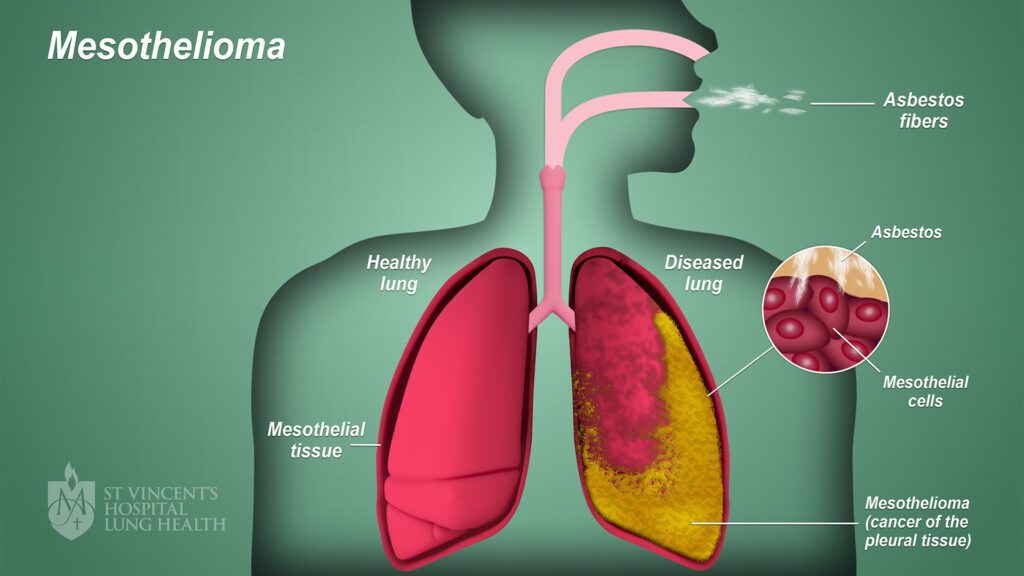
The microscopic fibres can become airborne when asbestos-containing materials are damaged or disturbed. These fibres cannot normally be seen with the naked eye and may be inhaled deep into the lungs.
Exposure to airborne asbestos fibres can contribute to serious and potentially fatal diseases, including:
- Mesothelioma
- Lung cancer
- Asbestosis
- Pleural plaques and pleural thickening
- Cancer of the larynx or ovaries
Asbestos-related illnesses can take decades to develop, and there is no known safe level of exposure to airborne asbestos fibres.
How Can Exposure Occur Around a Super Six Roof?
The main risk occurs when asbestos fibres are released into the air and inhaled. This may happen during:
- Cutting, drilling, grinding or sanding asbestos cement sheets
- Breaking or dropping roof sheets during removal
- Cleaning the roof with high-pressure water equipment
- Scraping away moss, lichen or old coatings
- Storm, hail, fire or falling-tree damage
- Renovation, demolition or roof replacement work
- Deterioration of old or badly weathered roofing
Asbestos-containing dust and fragments can also collect in gutters, downpipes, ceiling spaces and around the perimeter of the building.
How to Protect Yourself Around Super Six Roofing
Do not drill, cut, sand, scrape or break suspected Super Six roof sheets. You should also never use a pressure cleaner on an asbestos cement roof. High-pressure water cleaning of asbestos-containing materials is prohibited in Queensland because it can spread asbestos-contaminated dust and debris across the property and onto neighbouring properties.
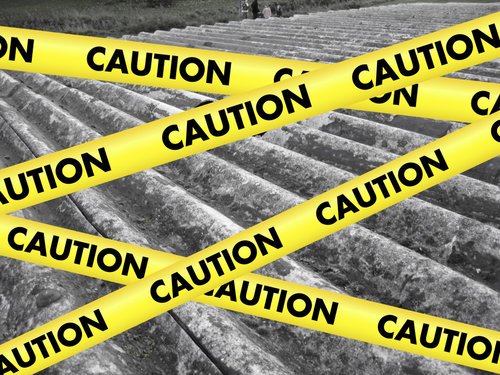
A roof that remains intact and in reasonable condition may be able to be managed temporarily without disturbing it. However, a roof that is cracked, badly weathered, leaking, storm damaged or nearing the end of its serviceable life should be assessed by an appropriately licensed asbestos professional.
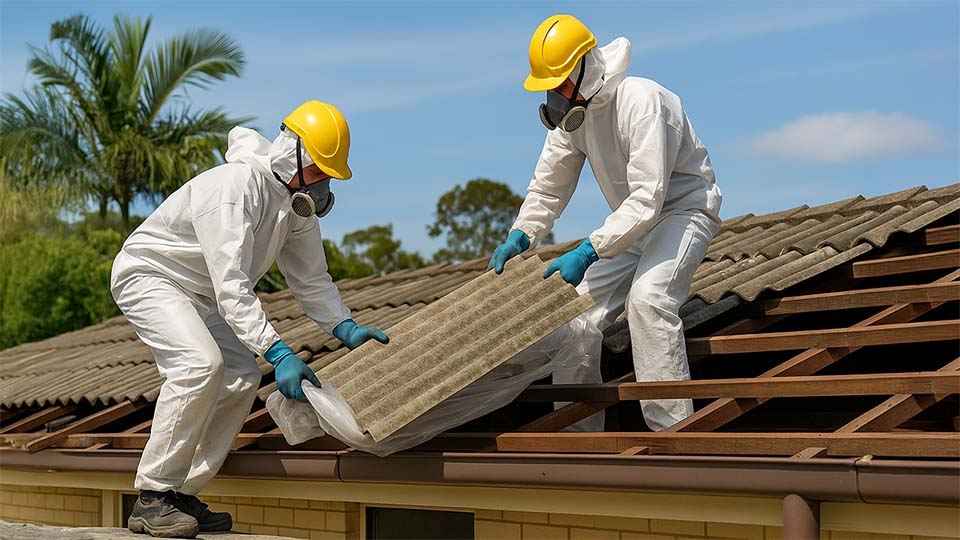
Most asbestos roof removals involve considerably more than 10 square metres of bonded asbestos. In Queensland, businesses removing more than 10 square metres of non-friable asbestos must hold an appropriate asbestos removal licence.
Super Six Asbestos Roof Removal and Replacement in Brisbane
Brisbane Roofing Co provides professional asbestos roof removal and replacement in Brisbane. Our team can assess an ageing Super Six roof, plan its controlled removal, arrange compliant transport and disposal, and install a modern replacement roofing system.
Brisbane Roofing Co holds QBCC Licence 15308647 and Asbestos Removal Licence 2330000. Speak with our team before disturbing, repairing or replacing suspected asbestos roofing.
The safest approach is to leave suspected Super Six asbestos roofing undisturbed and have it inspected by a licensed professional.