
Brisbane roofs have to cope with a demanding combination of strong sun, humidity, heavy rain, wind, hail and sudden summer storms. Over time, those conditions can expose weaknesses in roof sheets, tiles, flashings, gutters and drainage systems.
A small roofing problem may not seem urgent during dry weather, but the same fault can allow a significant amount of water into the roof cavity when a severe storm arrives. Knowing the early warning signs can help you arrange repairs before the damage spreads to ceilings, insulation, electrical fittings or internal walls.
This guide covers some of the most common roofing problems found on Brisbane homes, what may be causing them and when it is time to contact experienced roofing contractors in Brisbane.
Common Roofing Problems in Brisbane Homes
1. Roof Leaks
A roof leak is one of the most obvious signs that something is wrong, but the point where water appears inside the house is not always directly below the original problem.
Water can enter through a damaged section of roofing, travel along a rafter or batten and then drip onto the ceiling some distance away. This is why simply patching the area above a ceiling stain does not always solve the problem.
Common causes of roof leaks include:
- Cracked, broken or displaced roof tiles
- Rust holes in older metal roof sheets
- Loose, missing or corroded roofing screws
- Deteriorated flashing around walls, chimneys and roof penetrations
- Damaged valleys
- Poorly sealed skylights, vents or air-conditioning penetrations
- Blocked gutters causing water to overflow back towards the roof
- Previous repairs that have failed
What should be done?
A roofing contractor should trace the leak back to its actual entry point before recommending a repair. Depending on the cause, the work may involve replacing damaged tiles or sheets, repairing flashing, renewing fasteners, clearing drainage points or correcting an incorrectly installed roof penetration.
A recurring leak should not be repeatedly covered with sealant without identifying why the water is entering. Excessive sealant can conceal the problem temporarily while deterioration continues underneath.
2. Cracked, Broken or Slipped Roof Tiles
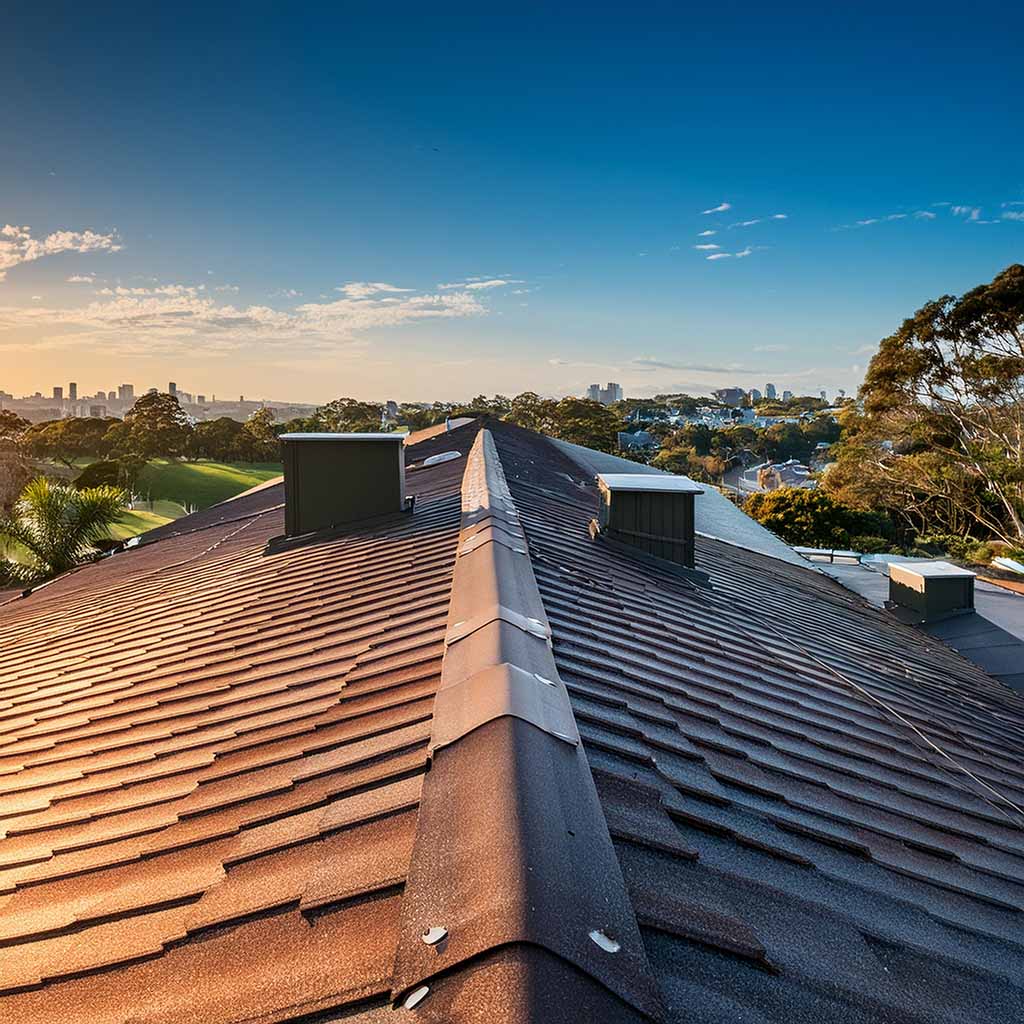
Concrete and terracotta tiles are common on Brisbane homes. They can provide reliable protection, but individual tiles may crack, break or move because of storms, falling branches, foot traffic or general ageing.
A single cracked tile may allow water into the roof cavity during wind-driven rain. Displaced tiles can also expose the underlay and surrounding roof structure to weather.
Signs of tile roof problems include:
- Visible cracks or missing sections of tile
- Tiles that no longer sit evenly with the surrounding roof
- Fragments of tile in gutters or around the house
- Water stains appearing after heavy rain
- Daylight visible from inside the roof cavity
- Deteriorated mortar around ridge and hip tiles
Damaged tiles should be replaced with a compatible tile wherever possible. If the problem affects a large part of the roof, a professional should assess whether targeted repairs, restoration or complete roof replacement using a suitable Brisbane roofing material represents the better long-term option.
3. Rust and Corrosion on Metal Roofs
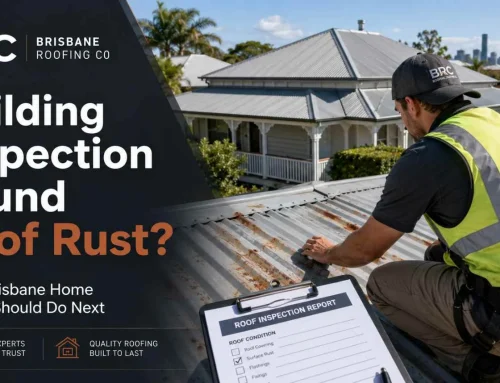
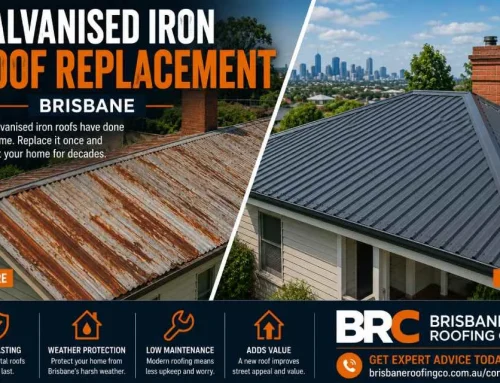
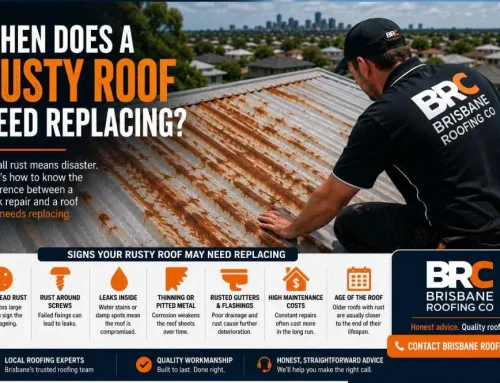
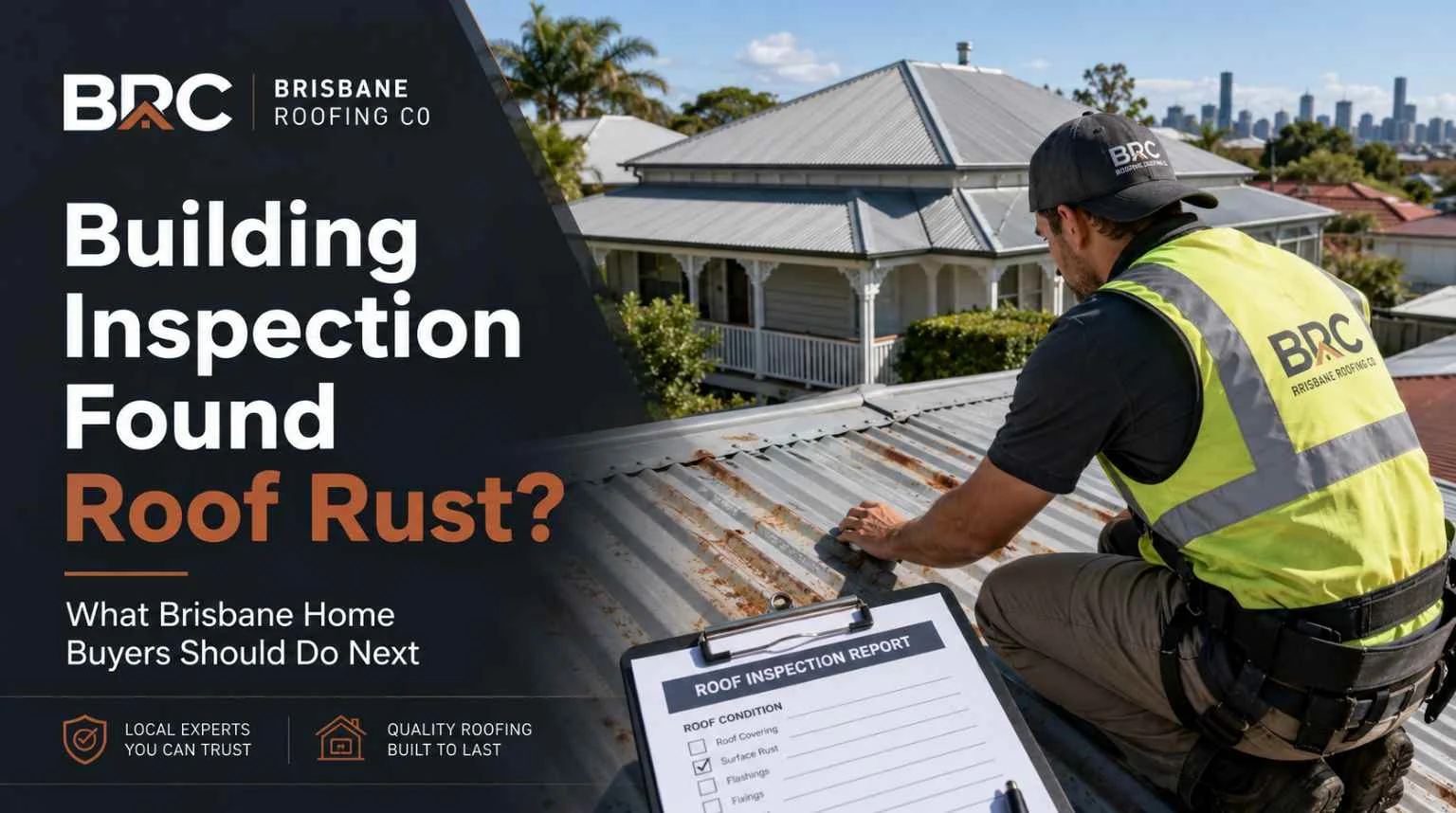
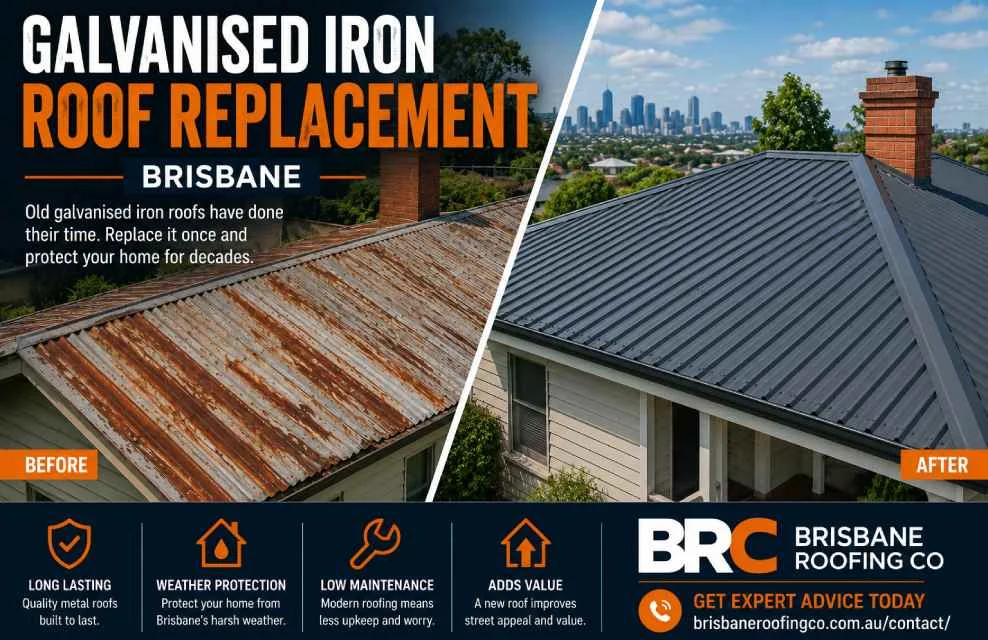
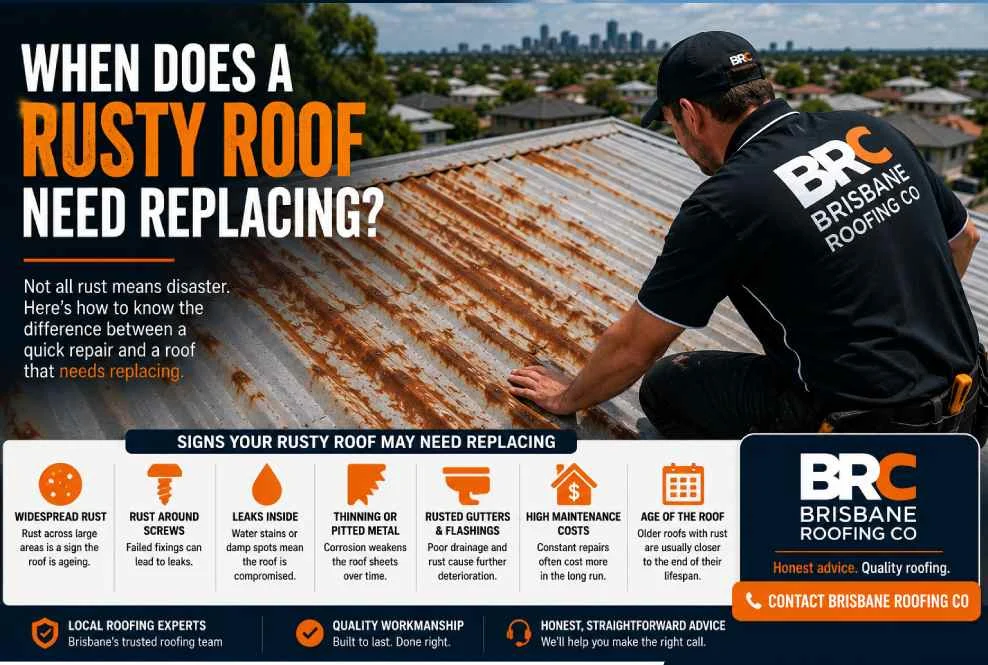
Older galvanised and metal roofs can develop surface rust, particularly around screws, sheet overlaps, gutters, valleys and areas where leaves or other debris trap moisture.
Surface discolouration does not always mean the entire roof needs replacing. However, corrosion that has caused pitting, holes or thinning of the metal is more serious and may eventually allow water into the building.
Factors that can contribute to roof corrosion include:
- Ageing or damaged protective coatings
- Leaves and debris holding moisture against the roof
- Incompatible metals coming into contact
- Incorrect fasteners or fixings
- Poor drainage around laps, gutters or valleys
- Salt and airborne contaminants in exposed locations
- Damage caused during later solar, antenna or air-conditioning work
Minor surface corrosion may sometimes be treated as part of a properly prepared repair or restoration. Roof sheets with extensive corrosion, perforations or widespread coating failure may need to be replaced.
4. Loose or Deteriorated Roofing Screws
Metal roof sheets rely on correctly positioned and secured fasteners. Over time, screws may loosen, seals can deteriorate and corrosion can develop around the fixing points.
Loose screws can allow sheets to move during strong winds and may create a path for water to enter. Simply installing larger screws is not always an appropriate repair, particularly when the battens or surrounding roof sheet have also been damaged.
A roofing contractor should check the condition of the sheets, fasteners and supporting battens before deciding on the correct repair method.
5. Damaged Roof Flashing
Flashing directs water away from roof joints and vulnerable areas. It is commonly installed around chimneys, skylights, walls, vents, valleys and changes in roof direction.
Leaks may occur when flashing is:
- Corroded or physically damaged
- Too short or incorrectly shaped
- Poorly fixed
- Incorrectly overlapped
- Separated from the adjoining surface
- Covered with deteriorating sealant from an earlier repair
Flashing repairs need to be designed around the way water moves across the roof. Applying sealant over a badly installed flashing may provide only temporary relief and can make a permanent repair more difficult.
6. Blocked or Overflowing Gutters
Brisbane’s leafy suburbs can create an ongoing gutter maintenance problem. Leaves, bark, twigs and seed pods can quickly block gutters, downpipes and valley outlets.
During heavy rain, blocked drainage can cause water to overflow over the front of the gutter, back towards the fascia or into the roof cavity. Persistent overflow may contribute to damaged eaves, stained walls, rotting fascia boards and moisture around the foundations.
Warning signs include:
- Water spilling over gutters during rain
- Plants growing from the gutter
- Staining beneath the gutter line
- Sagging or separated gutter sections
- Water pooling around downpipes
- Rust around gutter joints
Gutters, downpipes and drainage outlets should be kept clear. Properties surrounded by large trees may need more frequent maintenance, particularly before Brisbane’s summer storm season.
Do not climb onto a wet, steep or deteriorated roof to clean it yourself. Appropriate access and fall protection are important for any work performed at height.
7. Storm, Wind and Hail Damage
Severe Brisbane thunderstorms can bring intense rainfall, strong wind gusts and hail. Even when a roof appears intact from ground level, a storm may loosen sheets, crack tiles, damage flashings or affect roof-mounted equipment.
After a severe storm, look for:
- Tiles or roof fragments on the ground
- Lifted or displaced metal sheets
- Loose gutters, fascia or flashing
- Dents or impact marks
- Water stains on ceilings or walls
- Debris lodged in valleys and gutters
- Damage caused by fallen branches
Do not walk on the roof to inspect storm damage. Apart from the risk of falling, damaged tiles, metal sheets and older asbestos-cement roofing may be fragile. A professional inspection can identify problems that are difficult to see safely from the ground.
8. Roof Valley Problems
Roof valleys carry a concentrated flow of water from adjoining roof sections. They are particularly vulnerable when leaves, twigs or roofing debris restrict the flow of water.
Leaks can also develop when valley metal has rusted, tiles have been cut or positioned incorrectly, or the valley does not have enough capacity for the volume of water reaching it.
A problem with a valley should be investigated promptly because a large amount of water can enter the roof cavity during a heavy downpour.
9. Heat and Moisture in the Roof Space
Roof spaces can become extremely hot during Brisbane summers. Moisture may also collect where warm, humid air meets a cooler surface, particularly when insulation, ventilation or condensation control has not been properly considered.
Possible signs of a roof-space moisture problem include:
- A damp or musty smell
- Mould on timber or insulation
- Water droplets beneath metal roof sheets
- Discoloured ceilings without an obvious roof leak
- Insulation that is wet or compressed
- Excessive heat in rooms below the roof
Installing additional vents is not automatically the correct solution for every home. Ventilation needs to work with the roof design, insulation, sarking and ceiling system. A roofing professional should determine whether the moisture is caused by a leak, condensation or another building issue before recommending changes.
10. Deteriorated Ridge Capping and Bedding
On tiled roofs, ridge and hip tiles are commonly secured using bedding and pointing materials. Over time, movement and weather exposure can cause sections to crack, separate or deteriorate.
Small surface cracks do not necessarily mean the entire roof needs restoration. However, loose ridge tiles or widespread failure should be assessed because they can allow water into the roof and may become unstable during strong winds.
Repairs should address loose materials and the underlying cause rather than simply coating visible cracks.
11. Damage Around Solar Panels and Roof Penetrations
Solar panels, antennas, skylights, vents and air-conditioning equipment all create additional fixing points or penetrations in a roofing system.
Problems may occur when brackets are incorrectly fitted, roof tiles are cracked during installation, flashings are incomplete or sealants deteriorate. Debris can also accumulate beneath solar panels and restrict drainage.
When a leak appears near rooftop equipment, both the roofing and the installation around the equipment may need to be inspected.
12. Ageing Asbestos-Cement Roofing
Some older Brisbane homes, garages and sheds still have corrugated asbestos-cement roofing, often referred to as Super Six. These roofs can become brittle as they age and must not be drilled, sanded, cut or pressure cleaned.
High-pressure cleaning can damage the cement surface and spread asbestos-containing debris across the property and neighbouring areas. Suspected asbestos roofing should be left undisturbed and assessed by an appropriately licensed asbestos professional.
Do not walk on an asbestos-cement roof. Apart from the asbestos risk, ageing sheets may break without warning.
Does a Roof Problem Need Repair or Replacement?
Not every leak means you need a new roof. A localised issue such as a cracked tile, isolated flashing fault or small section of storm damage may be repairable.
Roof replacement is more likely to be appropriate when:
- Leaks are occurring in several areas
- Metal sheets have widespread rust or perforations
- A large number of tiles are cracked, damaged or difficult to match
- Previous repairs continue to fail
- The roof contains deteriorated asbestos cement
- Storm damage affects a substantial section of the roof
- The roofing material has reached the end of its serviceable life
- The cost of repeated repairs is no longer practical
A thorough roof inspection should consider the roofing material, flashings, valleys, battens, gutters, drainage and visible roof structure before a recommendation is made.
How Brisbane Homeowners Can Reduce Roofing Problems
Arrange Inspections Before Problems Become Serious
A roof inspection can identify cracked tiles, loose sheets, deteriorated flashing, blocked valleys and corrosion before the damage reaches the inside of the home.
It is particularly sensible to arrange an inspection when:
- The roof has not been checked for several years
- You have recently experienced a severe storm
- You notice ceiling stains or musty smells
- You are buying or renovating an older property
- Solar panels or other rooftop equipment have been installed
- The roof has a history of recurring leaks
Keep Gutters and Drainage Points Clear
Remove accumulated leaves and debris from gutters, downpipes and accessible stormwater drains. Consider professional gutter cleaning when the roof is high, steep or difficult to access.
Manage Overhanging Trees
Branches rubbing against a roof can damage coatings, crack tiles and deposit leaves into gutters and valleys. Dead or unstable branches may also become a serious hazard during storms.
Use Compatible Roofing Materials
Roof sheets, flashings, screws, gutters and brackets should be compatible with one another. Mixing incompatible metals can contribute to premature corrosion.
Avoid Unnecessary Roof Traffic
Walking on a roof can crack tiles, deform metal sheets and damage protective coatings. It also creates a serious fall risk. Roofing inspections and repairs should be completed using suitable access and safety equipment.
Do Not Rely on Repeated Temporary Patches
Roof sealants can be useful in certain properly prepared repairs, but they should not replace correctly installed flashing, roof sheets or tiles. If the same area continues to leak, the underlying cause needs to be found.
Quick Guide to Common Brisbane Roofing Problems
| Roofing problem | Possible cause | Recommended response |
|---|---|---|
| Water stains or active leaks | Damaged tiles, rusted sheets, failed flashing or blocked drainage | Arrange an inspection to locate the actual entry point |
| Cracked or missing tiles | Storms, impact, foot traffic or ageing | Replace compatible tiles and inspect surrounding areas |
| Rust on a metal roof | Coating deterioration, trapped debris or incompatible materials | Assess whether treatment, repair or sheet replacement is required |
| Loose roof sheets | Failed fasteners, wind damage or damaged battens | Inspect sheets, fixings and supporting structure |
| Overflowing gutters | Leaves, debris, blocked downpipes or inadequate drainage | Clear and inspect the complete roofwater system |
| Loose ridge capping | Cracked pointing, failed bedding or roof movement | Repair loose sections and investigate the underlying condition |
| Damp roof cavity | Roof leak, condensation or inadequate moisture management | Identify the moisture source before changing ventilation |
| Storm or hail damage | Strong winds, hail or fallen branches | Keep off the roof and arrange a professional assessment |
| Deteriorated asbestos roofing | Age, weather exposure or previous disturbance | Do not disturb or pressure clean; contact a licensed professional |
Get Roofing Problems Checked Before the Next Brisbane Storm
A roof does not need to be visibly collapsing before it deserves attention. A cracked tile, rusted screw or blocked valley can remain unnoticed during dry weather and then cause considerable damage during a heavy Brisbane downpour.
The safest approach is to have suspicious leaks, movement, corrosion or storm damage inspected before attempting repairs yourself. A professional roofer can determine whether the problem requires a straightforward repair, more extensive restoration or complete roof replacement.
Brisbane Roofing Co inspects and repairs tiled and metal roofing throughout Brisbane. The team can assess the condition of your roof, explain the available options and provide a clear scope of work based on what the property actually needs.