
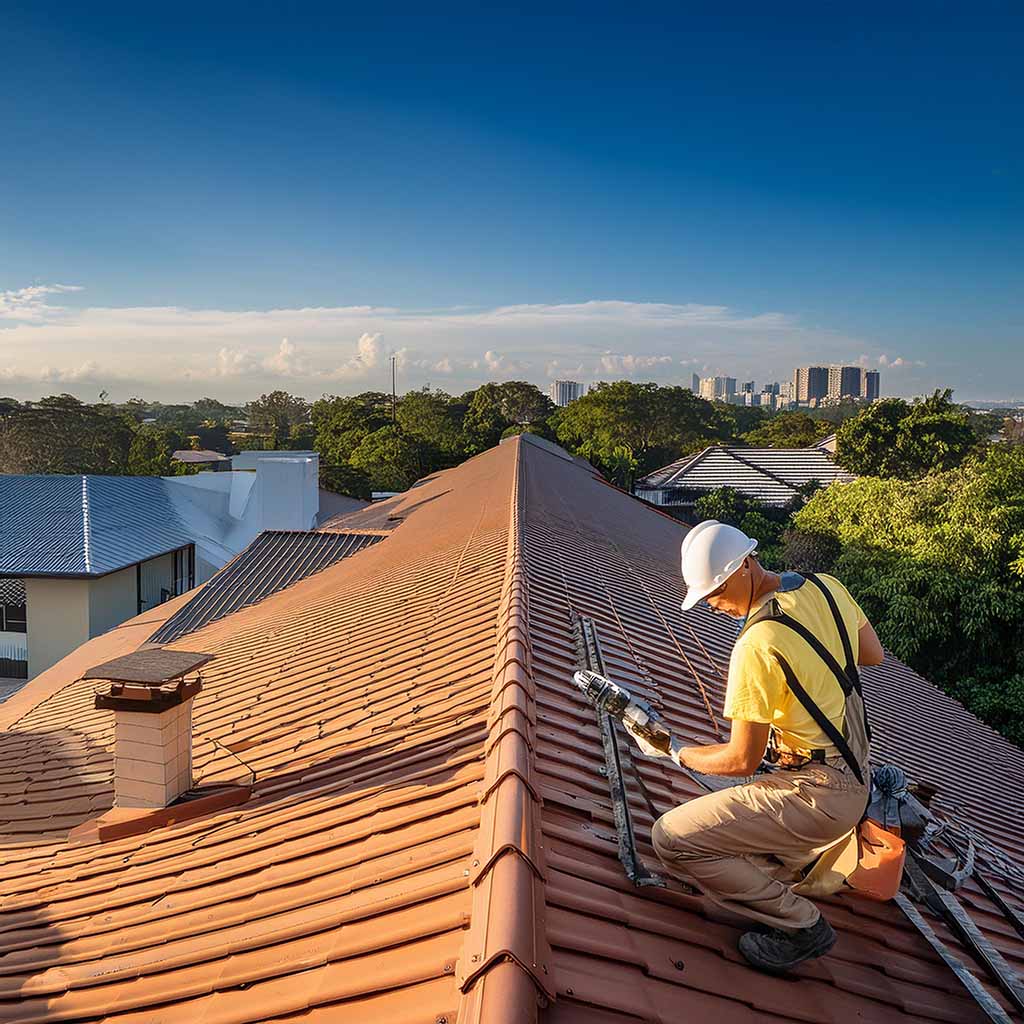
Most homeowners do not think about their roof until they notice a ceiling stain, a loose tile or water entering during heavy rain. By that stage, a relatively localised roofing problem may already have affected insulation, plasterboard, timber or electrical fittings inside the home.
A professional roof inspection in Brisbane can help identify visible deterioration before it develops into a more disruptive problem. It can also give you a clearer understanding of whether the roof needs maintenance, a specific repair or more extensive work.
The inspection should be carried out by a suitably experienced and, where required, appropriately licensed contractor. Choosing experienced roofers in Brisbane is particularly important when the property has a steep roof, difficult access, storm damage or suspected asbestos-cement sheeting.
Why Roof Inspections Matter in Brisbane
Brisbane roofs are regularly exposed to strong sunlight, heat, humidity, heavy rainfall, wind and severe thunderstorms. These conditions can gradually affect roof tiles, metal sheets, fasteners, flashings, sealants, gutters and other parts of the roofing system.
Many roofing faults are difficult to see from the ground. A roof may look generally sound while still having cracked tiles, corroded fasteners, blocked valleys or deteriorated flashing around a penetration.
Find Developing Problems Earlier
One of the main benefits of a roof inspection is the opportunity to identify visible defects before they cause widespread damage.
For example, a cracked tile or failed section of flashing may initially allow only a small amount of water into the roof cavity. If it remains unnoticed, repeated rain can damage ceiling insulation, stain plasterboard and contribute to timber deterioration or mould growth.
An inspection does not guarantee that every concealed defect will be found. However, it can reveal warning signs and areas requiring closer investigation.
Common issues found on Brisbane roofs include:
- Cracked, broken or displaced roof tiles
- Rust or perforations in older metal roof sheets
- Loose, missing or corroded roofing fasteners
- Deteriorated flashing around walls, chimneys and penetrations
- Blocked gutters, valleys or downpipes
- Loose ridge or hip tiles
- Damaged pointing or bedding on tiled roofs
- Storm, wind or hail damage
- Debris collecting beneath solar panels or in roof valleys
- Signs of water entering the roof cavity
Read more about common roofing problems found on Brisbane homes.
Reduce the Risk of Unexpected Leaks
A roof can remain watertight during light rain and still leak during a severe storm. Wind-driven rain may enter through faults that are not exposed during calmer conditions, including poorly fitted flashings, loose sheets and openings around roof penetrations.
Checking the roof before Brisbane’s summer storm season can help identify visible weaknesses while there is still time to arrange suitable repairs.
This is particularly worthwhile when:
- The roof is ageing or has previously leaked
- Several repairs have already been completed
- Large trees overhang the property
- Solar panels or other equipment have recently been installed
- The gutters frequently overflow during heavy rain
- The roof has not been professionally assessed for several years
Support a Longer Serviceable Life
A roof inspection cannot extend the life of a roof by itself. The benefit comes from identifying maintenance and repair work early enough for it to be effective.
Clearing drainage points, replacing damaged tiles, correcting loose fasteners and repairing deteriorated flashings may help prevent water from reaching other parts of the roofing system.
The serviceable life of a roof will still depend on factors such as:
- The roofing material and product quality
- The original standard of installation
- The property’s location and environmental exposure
- Roof pitch and drainage
- Storm and impact damage
- Maintenance completed over the years
- Whether compatible materials and fasteners were used
Be cautious of anyone who promises that an inspection or coating will add a fixed number of years to every roof. The condition and construction of each roof need to be considered individually.
Help You Plan and Budget for Future Work
Not every roofing defect requires immediate replacement. An inspection may find that the roof needs only targeted maintenance, while other issues can be monitored and included in future planning.
A useful inspection report should distinguish between:
- Urgent safety or water-entry concerns
- Repairs that should be completed soon
- Routine maintenance
- Areas that should be monitored
- Longer-term replacement considerations
This information can help homeowners budget for upcoming work instead of being caught by an unexpected failure during a storm.
Identify Possible Insulation or Moisture Problems
An external roof inspection does not automatically assess the energy efficiency of the entire home. However, when the roof space is safely accessible and included in the scope, an inspector may notice visible problems involving insulation, roof sarking, water entry or condensation.
Possible warning signs include:
- Wet or compressed ceiling insulation
- Water staining on roof timbers
- Corrosion beneath metal roofing
- Moisture droplets on the underside of roof sheets
- Gaps or displaced insulation
- Daylight visible through unintended openings
Heat and moisture problems are not always solved by adding roof vents. The roof design, insulation, sarking, ceiling construction and source of the moisture should be considered before changes are made.
Common Problems Found During Brisbane Roof Inspections
Cracked or Displaced Roof Tiles
Concrete and terracotta tiles can crack or move because of storms, falling branches, foot traffic, ageing or movement within the roof.
Damaged tiles may allow water to reach the underlay and roof cavity. An inspection should also consider why the tile was damaged rather than simply replacing it without checking the surrounding area.
Rust and Corrosion
Older metal roofing may develop corrosion around screws, sheet laps, valleys, gutters and places where debris holds moisture against the surface.
Minor surface corrosion does not always mean that the roof needs replacing. However, sheets with deep pitting, holes or widespread deterioration may no longer provide reliable weather protection.
Loose or Deteriorated Fasteners
Roofing screws and their seals can deteriorate over time. Loose fasteners may create a path for water and allow metal sheets to move during strong winds.
The surrounding roof sheet and supporting battens should be checked before screws are replaced. Installing larger screws without understanding why the original fixings failed may not provide a lasting repair.
Damaged Flashing
Flashing is used around walls, valleys, chimneys, skylights, vents and other roof junctions. It directs water away from areas where different surfaces meet.
Incorrectly installed, corroded or damaged flashing is a common source of roof leaks. Repeatedly applying sealant over a poorly designed flashing may conceal the problem without correcting it.
Blocked Gutters and Valleys
Leaves, bark, twigs and other debris can quickly accumulate on properties surrounded by trees. Blocked gutters and valleys may cause water to overflow towards fascia boards, eaves or the roof cavity.
An inspection should check visible drainage points and identify areas where debris is restricting water flow. Downpipe or underground stormwater problems may require separate assessment by an appropriately licensed plumber or drainer.
Storm and Hail Damage
Strong winds can lift sheets, move tiles and damage flashings. Hail may crack tiles, dent metal roofing and affect skylights, vents or rooftop equipment.
Some storm damage is difficult to identify safely from ground level. After significant weather, look for obvious warning signs such as roofing fragments, displaced gutters, ceiling stains or debris on the ground, but do not climb onto the roof yourself.
Deteriorated Ridge Capping
On tiled roofs, ridge and hip tiles are commonly secured with bedding and pointing materials. Cracking, separation or movement may allow water to enter or leave individual tiles unstable.
Not every hairline crack requires complete roof restoration. The inspector should determine whether the issue is cosmetic, localised or part of wider deterioration.
Problems Around Solar Panels and Penetrations
Solar brackets, antennas, skylights, vents and air-conditioning equipment can create vulnerable areas if they are incorrectly installed or later disturbed.
An inspection may identify cracked tiles, poorly sealed penetrations, incompatible fixings or debris collecting beneath the equipment.
Suspected Asbestos-Cement Roofing
Some older Brisbane homes, garages and sheds still have corrugated asbestos-cement roofing. It may be referred to as fibro or Super Six.
Suspected asbestos roofing should not be drilled, cut, sanded or pressure cleaned. It can also become brittle with age and may not safely support a person’s weight.
A contractor should identify suspected asbestos before accessing or disturbing the roof and arrange appropriate testing or licensed asbestos assistance where necessary.
When Should You Arrange a Roof Inspection?
There is no single inspection schedule that is suitable for every Brisbane property. The appropriate timing depends on the roof’s age, condition, material, location and history.
After a Severe Storm
Consider arranging an inspection after damaging winds, significant hail, falling branches or visible storm damage. Even when water has not entered the house, roof sheets, tiles, flashings and gutters may have been affected.
Check your insurer’s requirements before authorising permanent repairs if you may need to make a storm-damage claim. Emergency work may still be necessary to make the property safe or reduce further damage.
When You Notice Signs of Water Entry
Arrange an inspection when you notice:
- Water stains on ceilings or walls
- Dripping during rain
- Peeling or bubbling paint
- A damp or musty smell
- Wet insulation
- Mould around ceilings or cornices
The visible stain may not be directly beneath the entry point. Water can travel along roof timbers, battens or other building components before appearing inside.
Before Buying a Property
A standard pre-purchase building inspection may provide only a general assessment of the roof, particularly when access is restricted. If the roof is old, leaking, made from suspected asbestos or showing visible deterioration, a separate roofing assessment may provide more detail.
Confirm what the inspection includes before engaging the contractor. A visual condition report is different from invasive testing, structural engineering or an asbestos survey.
Before Installing Solar Panels
It makes sense to assess an ageing roof before solar panels are installed. Replacing or extensively repairing the roof after the panels have been fitted can add removal and reinstatement costs.
The inspection should consider the expected condition of the roof rather than simply whether it is leaking on the day.
Before Renovating or Replacing the Roof
A detailed assessment can help define the work required for a renovation or roof replacement. It may identify concerns involving battens, flashing, drainage, insulation, penetrations or suspected asbestos materials.
When repairs are becoming frequent or deterioration is widespread, the inspection can also help determine whether another repair is sensible or whether it is time to consider roof replacement in Brisbane.
As Part of Planned Maintenance
Periodic professional inspections can be useful for older roofs, properties with a history of leaks and buildings exposed to heavy tree cover or repeated storm activity.
Rather than relying on an automatic annual schedule, ask the inspector to recommend a reasonable future inspection interval based on the roof’s actual condition.
What Should a Professional Roof Inspection Include?
The scope should be explained before the inspection begins. Depending on the property, access and service requested, an inspection may include the following.
Ground-Level Assessment
The contractor may begin by examining the roofline, gutters, downpipes, fascia and visible roof surfaces from the ground. This can identify obvious movement, damage or access concerns.
External Roof Assessment
Where access is safe and appropriate, the inspector may examine:
- Roof sheets or tiles
- Ridge and hip capping
- Flashings and valleys
- Fasteners and sheet laps
- Skylights and roof penetrations
- Gutters and visible drainage outlets
- Solar mounting points
- Signs of corrosion, movement or previous repairs
Not every roof can or should be walked on. Steep, wet, storm-damaged or asbestos-cement roofs may require different access equipment or a non-contact inspection method.
Roof-Space Assessment
Where the roof cavity is safely accessible and included in the service, the inspector may look for:
- Water staining or active moisture
- Visible light entering through unintended gaps
- Wet or displaced insulation
- Corrosion beneath metal sheets
- Visible damage to battens or framing
- Signs that a leak has travelled from another area
A roofing contractor’s visual assessment is not the same as a structural engineering inspection. Sagging, movement or suspected structural damage may require assessment by a builder, engineer or another appropriately qualified professional.
Photographs and Written Findings
A useful inspection report should clearly explain what was inspected, what could not be accessed and what problems were observed.
Where appropriate, it should include:
- Photographs of relevant defects
- The location of each issue
- An indication of priority
- Recommended repairs or further investigation
- Any limitations affecting the inspection
- Whether suspected asbestos or structural concerns were observed
Be cautious of reports that recommend a complete replacement without clearly showing or explaining why it is necessary.
Can You Inspect Your Own Roof?
Homeowners can carry out a basic visual check from the ground or from inside the house. Look for displaced tiles, loose sheets, overflowing gutters, ceiling stains and roofing fragments around the property.
Binoculars or photographs taken from a safe ground-level position may help you see some parts of the roof more clearly.
Do not climb onto the roof for a DIY inspection. Falls from roofs and ladders can cause serious injuries, and walking on the surface may crack tiles or damage metal sheets. Older asbestos-cement roofing can also be extremely fragile.
Keep clear of the roof when:
- It is wet or windy
- The pitch is steep
- Storm damage is visible
- Electrical lines are nearby
- The material may contain asbestos
- There are signs of sagging or structural movement
How Much Does a Roof Inspection Cost in Brisbane?
The cost can vary depending on the type of inspection and the property. Factors may include:
- The size, height and pitch of the roof
- The roofing material
- The complexity of the roof design
- Access and safety requirements
- Whether the roof cavity is included
- Whether photographs or a formal written report are required
- Whether specialist equipment or further testing is needed
Some roofing companies may provide an assessment as part of preparing a repair or replacement quote. This is not necessarily the same as an independent written condition report, so confirm exactly what is included.
Roof Inspection Brisbane FAQs
How often should a Brisbane roof be inspected?
There is no universal timetable for every roof. Newer roofs in good condition may require less frequent professional assessment than ageing roofs, properties with previous leaks or homes surrounded by large trees. An inspection may also be sensible after severe weather or when visible warning signs appear.
Should a roof be inspected after hail?
Yes, when the hail was significant or there are signs of damage. Hail may crack tiles, dent metal roofing or damage skylights and roof-mounted equipment. Keep off the roof and arrange an assessment where damage is suspected.
Does a roof inspection include the gutters?
It should usually include a visual assessment of accessible gutters, valleys and roof drainage points, but the exact scope varies. Underground stormwater pipes and concealed drainage systems generally require a separate plumbing or drainage assessment.
Will an inspection find every roof leak?
Not always. Intermittent leaks can be difficult to reproduce, and some areas may be concealed or inaccessible. The report should explain any limitations and whether additional testing or investigation is recommended.
Does a leaking roof always need to be replaced?
No. Localised leaks may be repairable when the surrounding roof remains in serviceable condition. Replacement becomes more likely when deterioration is widespread, repairs repeatedly fail or the material has reached the end of its practical service life.
Arrange a Professional Roof Inspection in Brisbane
A roof inspection can provide useful information before a small problem becomes a major disruption. It can help identify visible damage, prioritise repairs and give you a more realistic understanding of the roof’s current condition.
Brisbane Roofing Co provides roof inspections, repairs and replacement services for metal, tiled and asbestos-cement roofs across Brisbane.
Our team can assess the accessible areas of your roofing system, explain any visible concerns and recommend work based on what the property actually needs.