
What to Do When Your Roof Is Leaking in Brisbane
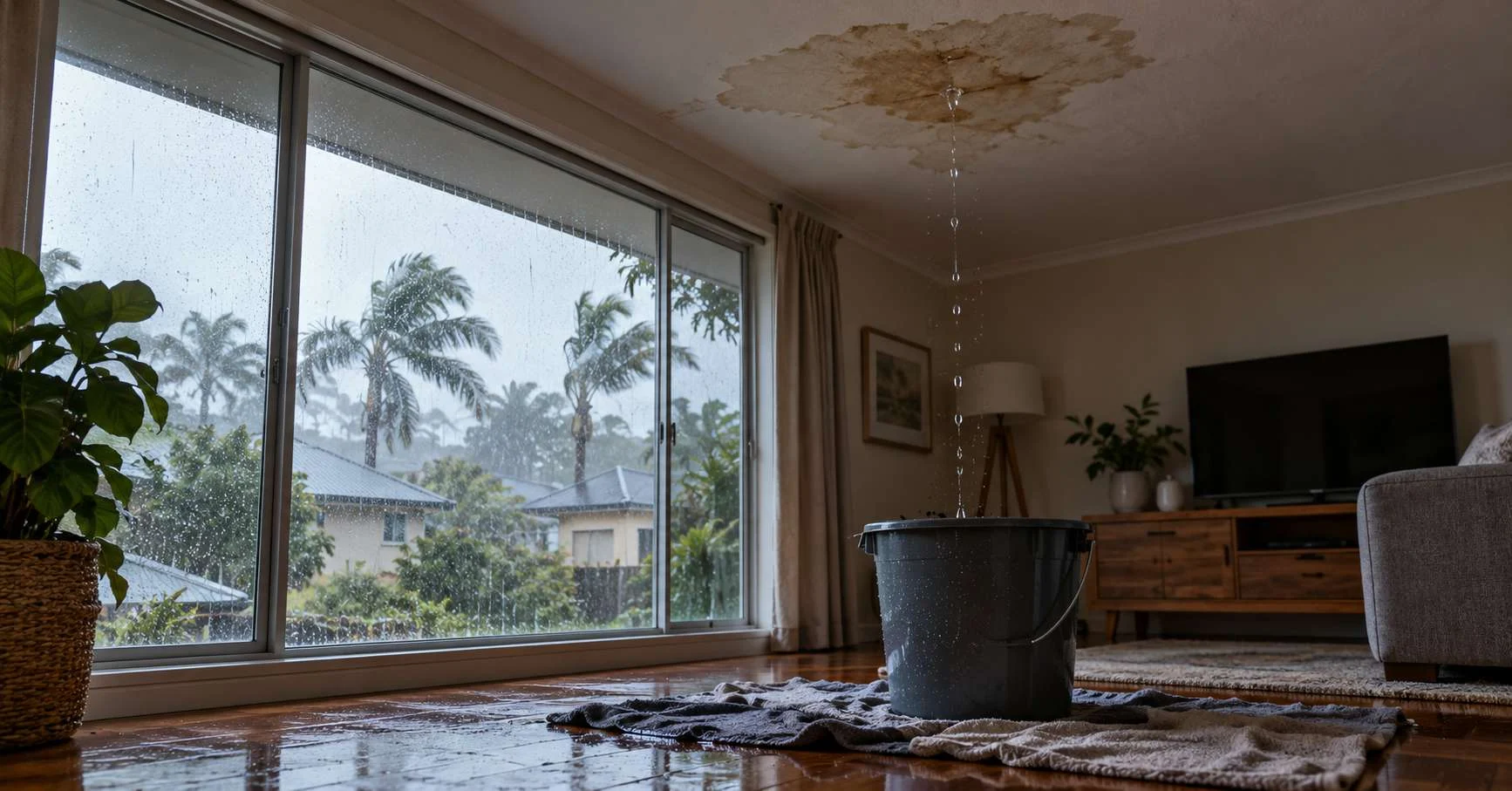
There are few things more frustrating than discovering water coming through your ceiling during a Brisbane downpour. One minute everything seems fine, and the next you're moving furniture, grabbing towels and wondering just how much damage is happening above your head.
A leaking roof doesn't automatically mean you need a completely new one. Sometimes the problem is isolated. In other cases, that drip is the first obvious sign of something that's been deteriorating for years.
The important thing is knowing what to do right now, what not to touch, and how to work out whether you're dealing with a minor defect or a roof that's approaching the end of its useful life.
Roof Leaking Right Now? Here's What to Do First
If water is already coming into your home, protecting people comes before protecting the building. Don't rush outside with a ladder or try to find the leak from the roof while it's raining.
1. Keep clear of electrical hazards
Water around ceiling lights, power points, electrical appliances or wiring can be dangerous. Keep people away from the affected area. If it is safe to reach the switchboard without entering water or touching wet electrical equipment, switch off the affected electrical supply. If you're unsure, contact a licensed electrician.
Don't touch a wet light fitting or investigate wiring in the ceiling. Turning off the power doesn't make damaged electrical equipment safe to handle.
2. Watch for sagging or bulging ceilings
A brown stain is one thing. A ceiling that's bowing down, cracking or holding visible water is another. Wet plasterboard can become heavy and collapse without much warning.
Keep everyone out of that area. Don't stand underneath it, climb into the ceiling cavity or attempt to puncture it.
3. Contain the water where it's safe
If the area is safe and there's no risk from electricity or a damaged ceiling, place a bucket or container under the drip. Use towels or waterproof sheeting to protect the floor, and move furniture, electronics, rugs and other belongings away from the affected area.
4. Take photographs
Photograph the affected ceiling, water damage and damaged belongings from a safe position. Record when the leak started, whether it happened during heavy rain or wind, and if this has happened before.
These details can help a roofing contractor understand the problem and may also be useful if you need to contact your insurance company.
5. Get appropriate help
For non-life-threatening emergency storm damage, the Queensland State Emergency Service can be contacted on 132 500. If there's an immediate danger to life, call 000.
Once the immediate danger is controlled, arrange an assessment with a suitably qualified roofing professional.
Above all, don't climb onto a wet or storm-damaged roof. The problem can wait until conditions are safe enough for a proper inspection.
Why Do Roofs Leak During Heavy Rain in Brisbane?
Brisbane's subtropical weather can be hard on older roofing. Summer storms can bring intense rainfall, strong winds and sudden changes in weather. A roof that copes with ordinary rain may struggle when water is driven sideways or gutters are overwhelmed by a heavy downpour.
It isn't always a large hole in the roof. Water can enter through surprisingly small openings, then travel along framing, insulation or the underside of sheeting before appearing somewhere completely different inside the house.
Common causes of leaks include:
- Rusting metal sheets: Corrosion around fixings, overlaps, valleys and older sheeting can create openings for water.
- Cracked or displaced tiles: Broken tiles and movement in an ageing tiled roof can allow moisture into the roof space.
- Failed flashing: Poorly sealed or damaged flashing around chimneys, walls, skylights and penetrations can let rain enter.
- Gutter and valley problems: Debris, corrosion or inadequate drainage can cause water to overflow where it shouldn't.
- Loose or deteriorated fixings: Older screws, washers and seals can fail over time.
- Storm damage: Wind-driven debris, hail and strong gusts can loosen or damage roofing materials.
- Poor previous workmanship: Incorrect overlaps, inadequate fall or poorly finished penetrations may only become obvious in severe weather.
The location of the stain inside your home is a useful clue, but it isn't proof of where the water is entering. A proper assessment needs to look at the likely entry points and the surrounding roofing system.
My Ceiling Is Leaking, but I Can't See Any Roof Damage
This is more common than many homeowners realise. You can have a substantial leak without seeing a missing tile or an obvious hole from the ground.
Water might enter around a flashing several metres away, follow a batten or structural member, and eventually drip through a plasterboard joint.
Condensation, plumbing leaks and problems around roof-mounted equipment can sometimes create similar symptoms. That's why it's worth checking the cause rather than automatically assuming every ceiling stain requires roofing work.
What should you tell the roofing contractor?
Try to remember whether the leak appears during every shower, only during heavy storms, or mainly when the wind comes from a particular direction.
Mention previous repairs, how old the roof is if you know, and whether there are solar panels, skylights, air-conditioning units or other penetrations nearby.
Small details like these can make it easier to narrow down the cause without guessing.
Can You Fix a Leaking Roof Yourself?
It's understandable to want to stop the leak immediately, particularly if water is damaging your ceilings or belongings. But there's a difference between containing water safely inside the house and attempting roofing repairs yourself.
Wet roofing materials are slippery, some older roofs may be fragile, and storm damage can leave sections unstable. Working at height also brings serious fall risks.
Applying silicone to a visible gap isn't necessarily going to solve the underlying problem. In some cases, it can simply redirect water somewhere else or make a later repair more difficult.
The safest approach is to manage the water from inside where possible, stay clear of damaged areas and have the cause investigated professionally.
Be especially careful with older asbestos roofing
Some older Brisbane properties have asbestos cement roofing. These sheets can be fragile, and disturbing asbestos-containing material can release hazardous fibres.
Never drill, cut, sand or pressure-clean a roof that may contain asbestos. Don't attempt to remove damaged sheets without appropriate professional advice.
If the material is suspected to contain asbestos, it should be assessed and handled under the relevant Queensland safety requirements.
Learn more about asbestos roof replacement in Brisbane .
When Is a Leaking Roof Worth Repairing?
Not every leak calls for a full re-roof. If the roofing materials are generally in good condition and the problem is limited to one clearly identified defect, a targeted repair may be all that's needed.
For example, an otherwise sound metal roof might have a damaged flashing around a skylight. A tiled roof might have suffered a small amount of localised storm damage. In situations like these, replacing the entire covering may not be the sensible option.
The bigger concern is when repairs become a regular expense. If one leak is fixed and another appears after the next heavy rain, it's worth investigating whether the problem is more widespread.
Brisbane Roofing Co focuses on complete re-roofing projects. Related repair and restoration work may form part of a larger replacement, rather than being offered as a standalone minor repair service.
When Does a Leaking Roof Need Replacing?
There's a point where continually fixing individual problems stops making financial sense. That doesn't mean every older roof is beyond repair. It means the condition of the entire system needs to be considered.
A home might have had several patch-ups over the years. Perhaps the original metal sheeting is badly rusted, the flashings are deteriorating and the fixings are failing in different locations. Fixing one leak might only uncover the next weak point.
Signs replacement deserves serious consideration
- Leaks keep returning despite previous repairs.
- Rust or corrosion is widespread across metal sheeting.
- Large sections of tile roofing are deteriorating.
- Multiple valleys, flashings or fixings are failing.
- There is significant storm or hail damage.
- Water damage has affected materials beneath the covering.
- The existing roof contains deteriorating asbestos cement.
- Repair costs are becoming frequent and difficult to justify.
A complete replacement allows the contractor to assess important parts of the system that may not be visible while the old materials are in place.
Depending on the property, that may involve battens, roof sarking, insulation, flashings, valleys, drainage and other associated components.
It also provides an opportunity to choose materials that better suit the building's design, exposure and long-term maintenance requirements.
For a closer look at the options, visit our Brisbane roof replacement services page.
Why Does My Roof Only Leak During Heavy Rain?
This can be particularly frustrating. A light shower passes without any problem, then a strong afternoon storm sends water through the ceiling.
One possibility is that the volume of water is exposing a drainage problem. A valley or gutter may cope with ordinary rainfall but struggle during a sudden downpour.
Another possibility is wind-driven rain. Water can be pushed beneath damaged laps, flashings or tiles when strong gusts come from a particular direction.
A leak that appears only in heavy weather shouldn't automatically be dismissed as normal. A sound roofing system needs to be suitable for its location and exposure, including the type of weather Brisbane properties can experience.
Recording the weather conditions when the leak appears may help identify the fault during an inspection.
What About Roof Leaks in Queenslander Homes?
Brisbane has plenty of older Queenslanders and character homes with roofing systems that have changed over time. Some have been re-sheeted, extended or modified several times. Others still contain older flashings, gutters or complicated roof junctions.
A leak near an extension isn't necessarily coming from the newest section. It could be entering where the two rooflines meet or where different materials have been joined.
Older homes can also have timber, drainage and access considerations that make planning particularly important.
Before recommending major work, the existing structure and the way water moves across the building need to be properly considered.
How Much Does It Cost to Fix a Leaking Roof in Brisbane?
There isn't a reliable flat price for a leaking roof because the visible damage doesn't tell you the full story. A stain on the ceiling could be associated with a relatively small defect, or it could be part of a much larger problem.
Costs depend on what needs doing, the type of roofing, property height, access, safety requirements and the materials involved.
What affects the cost of a full roof replacement?
- The overall size and shape of the roof.
- Whether the existing covering is metal, tile or asbestos.
- Roof pitch, height and access requirements.
- Removal and disposal of existing materials.
- Condition of battens, flashings and other components.
- New roofing materials and finishes.
- Guttering, insulation or sarking included in the scope.
- Any additional work discovered during removal.
A sensible quote should explain exactly what is included and what happens if concealed damage is discovered after the old covering comes off.
Be cautious about comparing two quotes based only on the total amount. The cheapest price may not include the same materials, safety provisions, disposal or associated work.
Will Home Insurance Cover a Leaking Roof?
That depends on the cause of the damage and the wording of your insurance policy.
A sudden event, such as storm or hail damage, may be treated differently from a leak caused by long-term deterioration, lack of maintenance or existing defects. It's important not to assume that every water-damaged ceiling or damaged roof is automatically covered.
Take photographs, keep records of the damage and contact your insurer promptly. Ask what emergency protection measures are appropriate and whether they require an inspection or approval before permanent work begins.
Where necessary, obtain a professional assessment that identifies the apparent cause and scope of damage. Your insurer will determine coverage under your policy.
How Brisbane Roofing Co Approaches an Ageing, Leaking Roof
When a roof has reached the stage where replacement is being considered, the important question isn't simply how to stop the next drip. It's whether the existing roofing system can continue doing its job reliably.
Brisbane Roofing Co focuses on full roof replacements, including ageing metal roofing, deteriorated tile systems, tile-to-metal conversions and asbestos re-roofing projects.
Looking beyond the obvious leak
A thorough assessment should consider the age and condition of the materials, the extent of any corrosion or deterioration, drainage, roof penetrations, access and the condition of associated components.
Explaining the available options
Homeowners should understand why a full replacement is being recommended, what materials are proposed and what will happen to the existing roof.
If a small repair is the sensible solution, that should be made clear rather than presenting a new roof as the answer to every problem.
Planning the work properly
Weather, site access, protection of the property, safe removal of existing materials and installation of the new system all need to be considered.
The aim is a finished roof that addresses the underlying issues rather than repeatedly covering up the symptoms.
How to Reduce the Risk of Future Roof Leaks
Not every roofing problem can be prevented, especially when severe storms are involved. However, paying attention to the condition of your roof and drainage system can help you spot deterioration before it becomes a major issue.
Have suitable professionals check damaged materials, deteriorating flashings and drainage problems when they first become apparent.
Keep gutters and downpipes clear through safe, appropriately arranged maintenance. Check the visible condition of the property from ground level after significant weather, and don't ignore new ceiling stains or damp patches.
If the roof has been repaired several times in recent years, keep a record of what was done and where. A pattern of repeated failures can be useful information when deciding whether further repairs are worthwhile.
The best time to investigate a potential problem is before water starts running down your walls during the next summer storm.
Frequently Asked Questions About Leaking Roofs in Brisbane
Is a leaking roof an emergency?
It can be, especially where water is near electrical equipment, a ceiling is sagging or significant storm damage has made the building unsafe. Keep clear of dangerous areas. For non-life-threatening storm emergencies in Queensland, contact the SES on 132 500. Call 000 if life is in immediate danger.
Should I get on the roof to find a leak?
No. Climbing onto a wet, damaged or unfamiliar roof can lead to serious injury. Water can also enter in one location and appear inside the home somewhere else. Have a suitable professional investigate when conditions are safe.
Can a roof leak without any missing tiles?
Yes. Failed flashing, deteriorated fixings, damaged underlay, blocked drainage and other defects may allow water to enter even when the roof looks intact from the ground.
Does a leaking roof always need replacing?
No. A localised defect may be repairable. Replacement becomes more relevant when the existing materials have widespread deterioration, recurring leaks or multiple failing sections.
Why does my roof only leak during storms?
Heavy rainfall can overwhelm poorly performing drainage, while strong winds may drive rain through vulnerable joints or flashings. The pattern and weather conditions can help a contractor identify the likely cause.
Can a metal roof start leaking as it gets older?
Yes. Corrosion, deteriorated fasteners, failed seals, flashing defects and movement around joints may contribute to leaks in ageing metal roofing.
Can Brisbane Roofing Co replace my old leaking roof?
Brisbane Roofing Co specialises in full re-roofing, including metal roofing, tile roofing, tile-to-metal conversions and asbestos roof replacement. Contact the team to discuss the condition of your property and whether replacement is suitable.
Is Your Brisbane Roof Leaking Again?
One leak doesn't necessarily mean your entire roof needs replacing. But if water keeps finding its way inside, previous repairs aren't lasting or the roofing materials are clearly deteriorating, it may be time to look at the bigger picture.
Brisbane Roofing Co provides complete re-roofing solutions for residential properties across Brisbane. Whether you're considering new metal roofing, replacing old tiles, converting from tile to metal or dealing with an ageing asbestos roof, the first step is understanding what your property actually needs.
Stop guessing about the next leak. Find out whether your existing roof is still worth repairing or whether a properly planned replacement is the better long-term option.
Prefer to talk? Call 1300 634 100 or visit our contact page.