
A building inspection can be a bit confronting when you are buying a home. One short comment about the roof can suddenly raise questions about repairs, cost, safety and whether the problem is serious enough to affect the purchase.
The important thing to remember is that most building inspections are visual. The inspector reports on what can be safely seen on the day. A roof may be checked from the ground, a ladder, a balcony or another safe access point, but it is not always walked on. That means the report can identify warning signs, but it may not give you the full roofing picture.
Here are some of the most common roof problems that show up in building inspection reports.
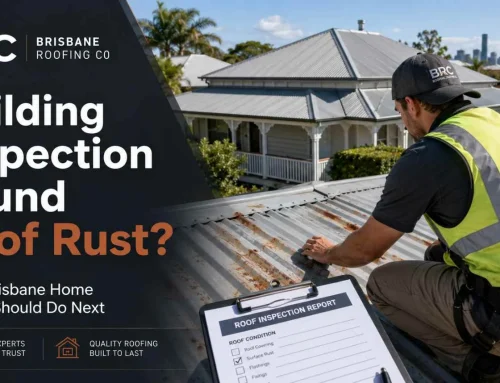
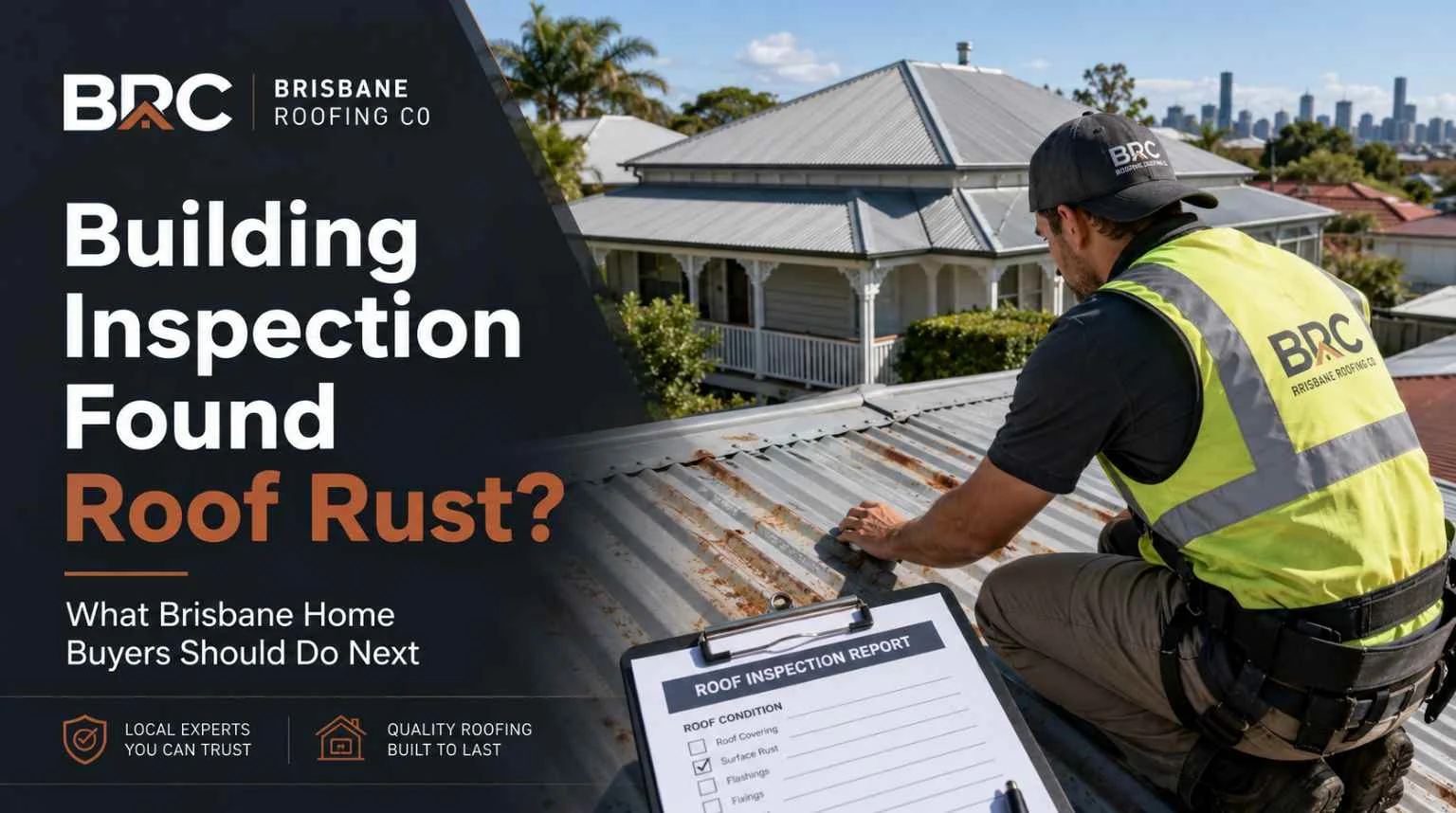
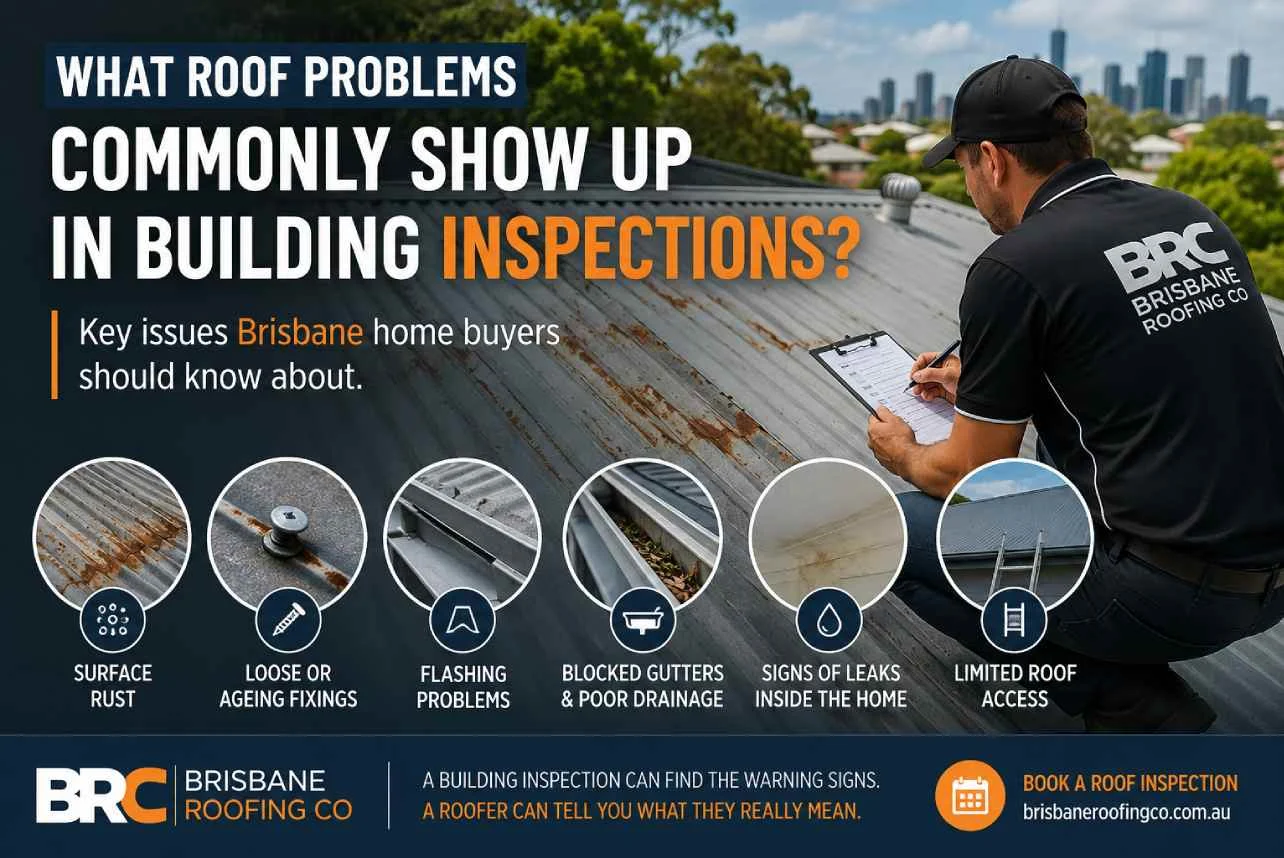
Surface rust on metal roof sheets
Surface rust is one of the most common findings on older metal roofs. It may appear on roof sheets, around fixings, along overlaps, near gutters or where water has been sitting for too long.
Surface rust does not always mean the roof needs replacing straight away. Sometimes it can be treated and monitored. However, it should not be ignored. In one inspection report we reviewed, the inspector noted that several galvanised iron roof sheets had surface rust and warned that failure to maintain the roof could eventually result in replacement being needed.
That is why it is worth getting a roofer to check how widespread the rust is before making assumptions.
Loose or ageing roof fixings
On metal roofs, screws and fixings do a lot of work. Over time, washers can perish, screws can loosen and movement in the roof can create small gaps where water can enter.
A building inspection may mention loose fixings, rust marks around screws or signs of water entry nearby. These may be repairable, but they can also point to a roof that needs broader maintenance.
Flashing problems
Roof flashing is used to direct water away from joins, penetrations, walls, valleys and edges. When flashing is damaged, poorly sealed or rusted, leaks can follow.
In the same building inspection report, the visible roof flashing appeared to be in satisfactory condition. :contentReference[oaicite:1]{index=1} That is good news for that particular property, but flashing still deserves attention during any roof inspection because it is one of the key places where water problems begin.
Blocked gutters and poor drainage
Gutters are sometimes treated as separate from the roof, but they play a big role in roof performance. If gutters are blocked with leaves, dirt or debris, water can back up under the roof edge or overflow into places it should not go.
In Brisbane, this matters even more before storm season. A roof that is already showing age or rust can deteriorate faster if water is not draining properly.
Signs of leaks inside the home
A roof issue may also show up inside the house. Water stains, bubbling paint, mould marks, swelling plasterboard or damp smells can all suggest moisture has entered the building.
Not every stain means the roof is currently leaking. It could be old damage. But if the report mentions ceiling marks and roof defects together, it is worth taking seriously.
Limited roof access
This is one of the most overlooked comments in a building inspection report. If the inspector could not fully access the roof, there may be parts of the roof that were not closely assessed.
In the inspection report we reviewed, the roof was not walked on due to access, pitch and height restrictions. The report explained that this created a limited review and recommended contacting a licensed roofer if a more detailed roof report was required. :contentReference[oaicite:2]{index=2}
That kind of comment is not something to panic about, but it is a good reason to organise a proper roof inspection.
Possible asbestos materials
Some older homes may contain materials that could include asbestos. A standard building inspection usually cannot confirm this. Laboratory testing or assessment by an appropriate specialist is needed.
If the roof or surrounding building materials are suspected of containing asbestos, do not disturb them. Get advice before planning repairs, replacement or renovation work.
What should you do if the report mentions roof problems?
Do not rely on guesswork. A building inspection can identify the warning signs, but a roofer can explain what the issue means in practical terms.
A roof inspection can help you understand whether the problem is minor maintenance, a repair job, a negotiation point or something that may need full roof replacement in the near future.
If your building inspection has raised concerns about rust, leaks, flashing, gutters or limited roof access, Brisbane Roofing Co can inspect the roof and give clear advice before you commit.
Book a roof inspection in Brisbane or learn more about roof replacement Brisbane.