
What Is Asbestos Roof Removal?
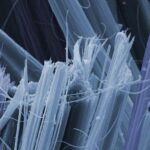
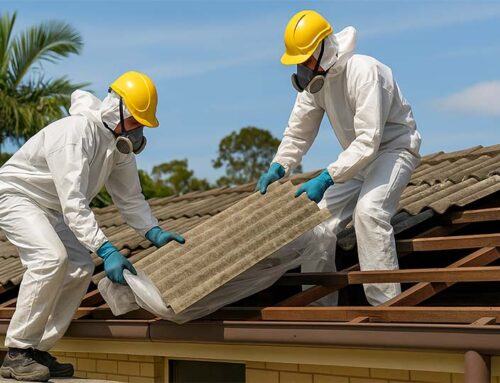
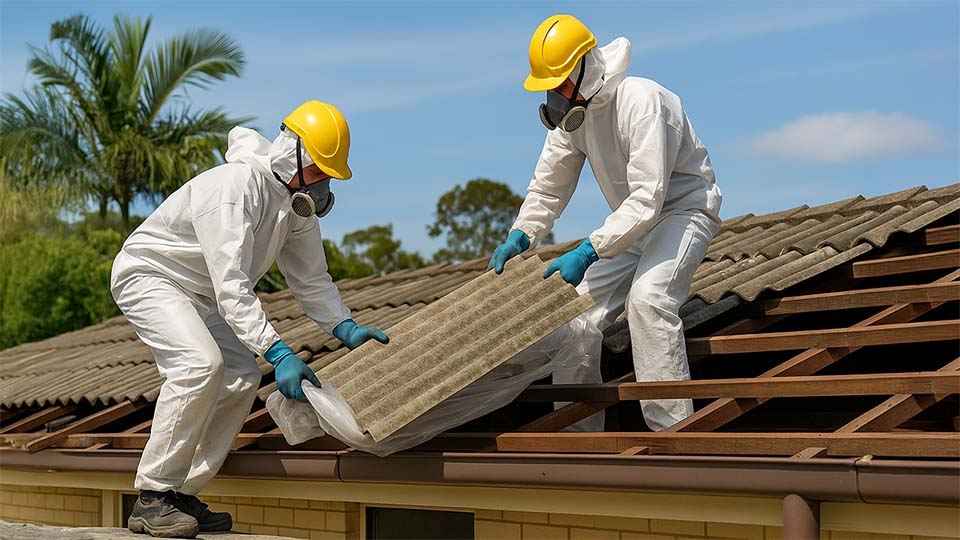
Asbestos roof removal in Brisbane is the controlled removal of asbestos-containing roof sheets, cappings, flashings and associated asbestos-contaminated debris from a building.
It does not involve separating asbestos from the roofing material. The asbestos cement sheets are removed as complete pieces wherever possible, securely wrapped or contained, transported under the applicable Queensland requirements and taken to a facility authorised to accept asbestos waste.
Asbestos roof removal requires careful planning because older cement sheets may be brittle and can release fibres if they are broken, drilled, cut, sanded or otherwise disturbed. Working on an ageing roof also creates a serious fall risk, particularly when the sheets can no longer safely support a person’s weight.
What Is Asbestos?
Asbestos is the name given to a group of naturally occurring fibrous minerals. It was added to many Australian building products because the fibres provided strength, heat resistance and durability.
Corrugated asbestos cement roof sheets were widely installed on Australian homes, garages, sheds, factories and commercial buildings before 1990. They are sometimes referred to as fibro roofing or Super Six, although Super Six was originally a particular deep-corrugated roofing product.
Australia prohibited the manufacture, supply, use and reuse of asbestos-containing products from 31 December 2003. The ban did not require asbestos products that were already installed in buildings to be removed, which is why asbestos roofing can still be found on older Brisbane properties.
Asbestos cement roofing is generally classified as non-friable, or bonded, asbestos because the fibres are held within a cement matrix. When the sheets remain sealed, intact and undisturbed, they generally present a low exposure risk. The risk increases when the material deteriorates or is damaged, broken, cut, drilled, sanded or pressure cleaned.
Does Every Asbestos Roof Need to Be Removed Immediately?
No. The presence of an asbestos roof does not automatically mean that an immediate emergency removal is required.
An intact asbestos cement roof in stable condition may be managed by leaving it undisturbed and monitoring its condition. However, asbestos roofs have now been exposed to Brisbane’s sun, rain, wind and storms for many decades. Some are becoming weathered, porous and brittle.
Professional assessment should be considered when an asbestos roof is:
- Cracked, broken or badly weathered
- Leaking in several areas
- Damaged by hail, wind, fire or falling branches
- Shedding fragments or surface material
- Unsafe or impractical to maintain
- Being affected by renovations, extensions or demolition
- Due to be replaced with modern metal or tiled roofing
Do not walk on a suspected asbestos cement roof to assess its condition. Ageing sheets may break without warning, creating both a fall hazard and an asbestos exposure risk.
How Can You Tell if a Brisbane Roof Contains Asbestos?
You cannot reliably identify asbestos by looking for white powder, black spots, brown stains or any other single visual sign. Staining, mould and surface deterioration can occur on many roofing materials and do not confirm the presence of asbestos.
The roof’s age, profile, manufacturer markings and construction can indicate that asbestos may be present, but appearance alone is not proof.
The only reliable way to confirm whether a roofing material contains asbestos is to have a representative sample analysed by a NATA-accredited laboratory. Sampling should be arranged through an experienced asbestos professional so the material is not unnecessarily broken or disturbed.
If the roof was installed before 1990 and its composition is uncertain, it should be treated as potentially containing asbestos until testing confirms otherwise.
What Happens During Professional Asbestos Roof Removal?
The exact process depends on the size, height, pitch and condition of the roof, as well as the type of building and the new roofing system being installed. A professional project will generally include the following stages.
1. Inspection and Project Planning
The contractor assesses the roof, confirms or verifies the asbestos-containing materials and plans the removal method. The inspection should also consider access, neighbouring properties, electrical hazards, fall protection, weather forecasts and the location of gutters, solar equipment and other roof penetrations.
2. Establishing the Work Area
Access to the removal area is restricted before work begins. Appropriate warning signs, exclusion zones, ground protection and safety controls are installed to protect workers, occupants and neighbouring properties.
The contractor should also plan how the building will be protected from weather between removal of the old sheets and installation of the new roof.
3. Removing the Asbestos Sheets
Wherever possible, roof sheets are carefully released from their fixings and removed intact. They should not be deliberately smashed, dropped from the roof or cut into smaller pieces simply to make handling easier.
Approved wet methods may be used to reduce the possibility of fibres becoming airborne. Power tools and work methods that create asbestos dust must not be used.
4. Removing Asbestos Debris
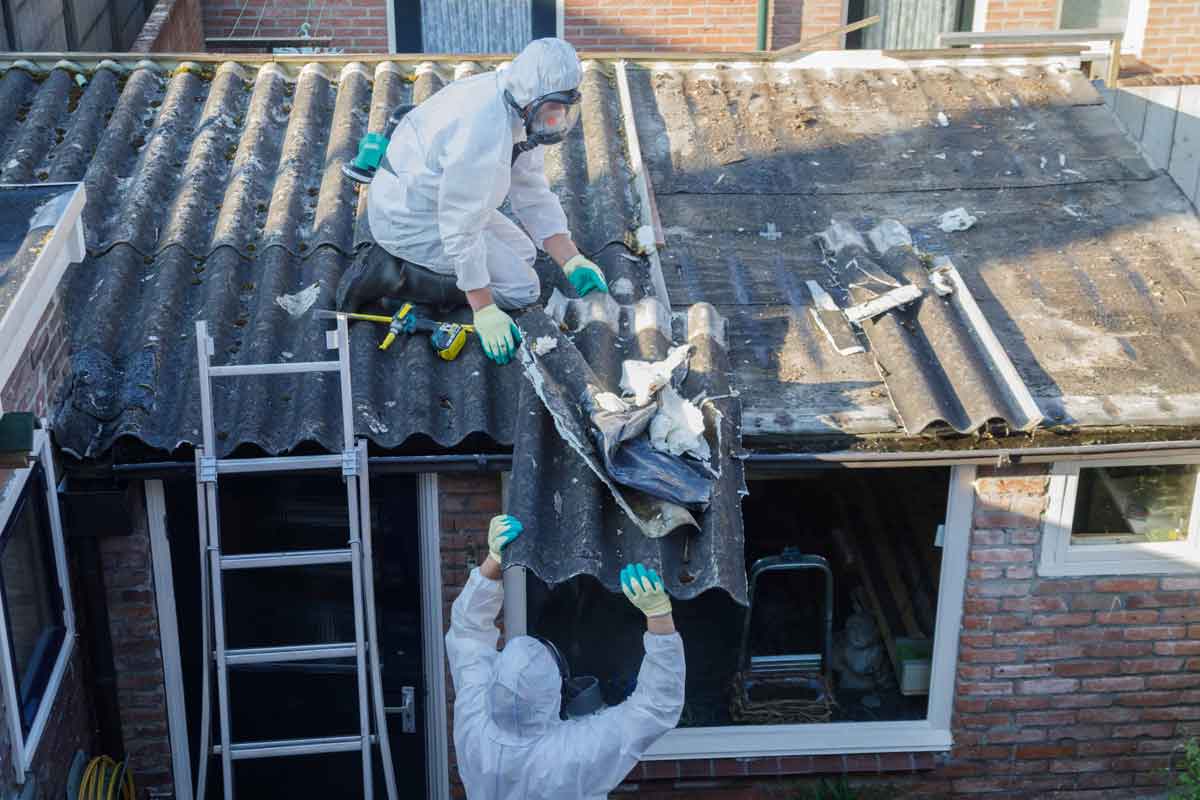
Small fragments, old fixings and asbestos-contaminated debris are collected from the roof structure, gutters and protected work area. Ordinary household vacuum cleaners and dry sweeping methods must not be used to clean asbestos dust.
Other parts of the building, such as ceiling insulation, do not automatically need to be removed simply because the roof contains asbestos. They should only be included where they contain asbestos, have been contaminated or need to be removed as part of the agreed roofing work.
5. Packaging and Transport
Removed asbestos sheets and debris are securely contained for transport. Queensland guidance requires asbestos waste to be double-wrapped in suitable 0.2 mm plastic sheeting or placed in an appropriately lined asbestos waste container, then sealed and labelled.
The waste must be transported in accordance with Queensland requirements and taken to a facility that is legally authorised to accept asbestos.
6. Final Cleaning and Inspection
The removal area is cleaned and checked before ordinary work resumes. Depending on the type and scope of the removal, additional clearance procedures or documentation may be required.
Once the asbestos removal stage has been completed, the exposed battens and visible roof structure can be inspected. Any agreed repairs are then carried out before the new roofing system is installed.
Queensland Asbestos Removal Licence Requirements
In Queensland, a business removing more than 10 square metres of non-friable asbestos must hold a current Class A or Class B asbestos removal licence.
- Class B licence: permits the removal of more than 10 square metres of non-friable asbestos and associated contaminated dust or debris.
- Class A licence: permits both friable and non-friable asbestos removal.
A complete residential asbestos roof will almost always be considerably larger than 10 square metres. This means the business performing the removal will generally need an appropriate asbestos removal licence.
An ordinary roofing or building licence does not replace the asbestos removal licence. Homeowners should verify both the roofing contractor and the asbestos removal business before signing a contract.
Can a Homeowner Remove an Asbestos Roof?
Queensland has limited provisions for homeowners undertaking small amounts of non-friable asbestos removal. However, a complete roof is not a small project.
Asbestos roof removal combines several serious hazards:
- Working at height
- Fragile and brittle roof sheets
- The possibility of releasing asbestos fibres
- Large, heavy and awkward sheets
- Protection of neighbours and surrounding properties
- Regulated waste transport and disposal
- The need to keep the building weatherproof
For these reasons, asbestos roof removal should be left to an appropriately licensed and equipped professional rather than attempted as a DIY project.
Asbestos Roof Disposal in Brisbane
Asbestos waste cannot be placed in a household wheelie bin, mixed with ordinary construction waste, reused, sold or left in a standard skip.
Brisbane City Council resource recovery centres do not accept asbestos-containing materials. Asbestos roofing must be taken to a waste facility that is lawfully authorised to receive it, using the required packaging and transport procedures.
A licensed asbestos removal contractor should explain:
- How the sheets will be wrapped or contained
- Who is responsible for transporting the waste
- Which authorised facility will receive it
- Whether disposal charges are included in the quote
- What documentation will be provided after removal
Asbestos sheets should never be cut into pieces and placed in an ordinary dumpster. Illegal disposal can expose workers, neighbours and the wider community to asbestos fibres.
Never Pressure Clean an Asbestos Roof
It is illegal in Queensland to use a high-pressure water cleaner on asbestos-containing roofs, walls or fences.
Pressure cleaning can damage the cement surface and spread asbestos fibres and contaminated slurry across gutters, gardens, neighbouring properties, stormwater drains and water-collection systems.
Suspected asbestos roofing should also not be:
- Cut or drilled with power tools
- Sanded or ground
- Cleaned with a stiff brush
- Broken into smaller sections
- Walked on unnecessarily
- Covered with new roofing without a proper assessment
How Much Does Asbestos Roof Removal Cost in Brisbane?
There is no accurate flat rate for asbestos roof removal. Older price ranges that treat asbestos as a small roofing add-on can be misleading because the removal must be planned as a regulated project.
The price can be affected by:
- The total roof area
- The condition and brittleness of the sheets
- The height and pitch of the roof
- Access for workers, equipment and waste removal
- Scaffolding and edge-protection requirements
- Solar panels, antennas and air-conditioning equipment
- Asbestos-containing cappings, gutters or wall sheets
- The amount of contaminated debris
- Transport and authorised disposal fees
- Repairs required to battens or the roof structure
- The new roofing material, insulation and flashings
A complete quote should separate or clearly identify the cost of licensed asbestos removal, disposal, safety controls, structural repairs and installation of the new roof.
How Long Does Asbestos Roof Removal Take?
Some straightforward residential removals may be completed relatively quickly, but it is not accurate to promise that every asbestos roof can be removed and replaced in one day.
The timeframe depends on the roof area, access, weather, condition of the sheets, safety setup and the amount of repair work found after the old roofing is removed.
The contractor should provide a realistic schedule covering:
- Site preparation
- Asbestos removal
- Cleaning and inspection
- Repairs to battens or framing
- Installation of the new roof
- Final flashings, gutters and clean-up
Asbestos Roof Removal Brisbane FAQs
Is an intact asbestos roof dangerous?
An intact and sealed asbestos cement roof generally presents a low risk while it remains undisturbed. The risk increases when sheets are weathered, damaged or disturbed in a way that releases fibres.
Can asbestos be identified from photographs?
Photographs and an onsite inspection may indicate that a roofing product is likely to contain asbestos, but only laboratory testing can confirm its composition.
Can an asbestos roof be repaired?
Minor management or maintenance may be possible when the material remains in good condition. Drilling, cutting and pressure cleaning must be avoided. A badly weathered, brittle or repeatedly leaking roof may be better suited to complete removal and replacement.
Can new roofing be installed over asbestos sheets?
Covering an asbestos roof can leave a fragile and hazardous material concealed beneath the new system. It may also complicate future maintenance, structural inspection and eventual removal. The roof should be professionally assessed before any over-cladding proposal is considered.
Does an asbestos roof need laboratory testing before removal?
The material can sometimes be assumed to contain asbestos and managed accordingly. Where confirmation is needed, a representative sample should be analysed by a NATA-accredited laboratory.
Where does asbestos roofing go after removal?
It must be transported and disposed of at a facility authorised to accept asbestos waste. Brisbane City Council’s ordinary resource recovery centres do not accept asbestos.
Licensed Asbestos Roof Removal and Replacement in Brisbane
Brisbane Roofing Co provides licensed asbestos roof removal and complete roof replacement services throughout Brisbane.
Our team can assess an ageing asbestos cement roof, prepare a clear scope of work, arrange compliant removal and disposal, inspect the exposed supporting structure and install a modern replacement roofing system.
QBCC Licence: 15308647
Asbestos Removal Licence: 2330000